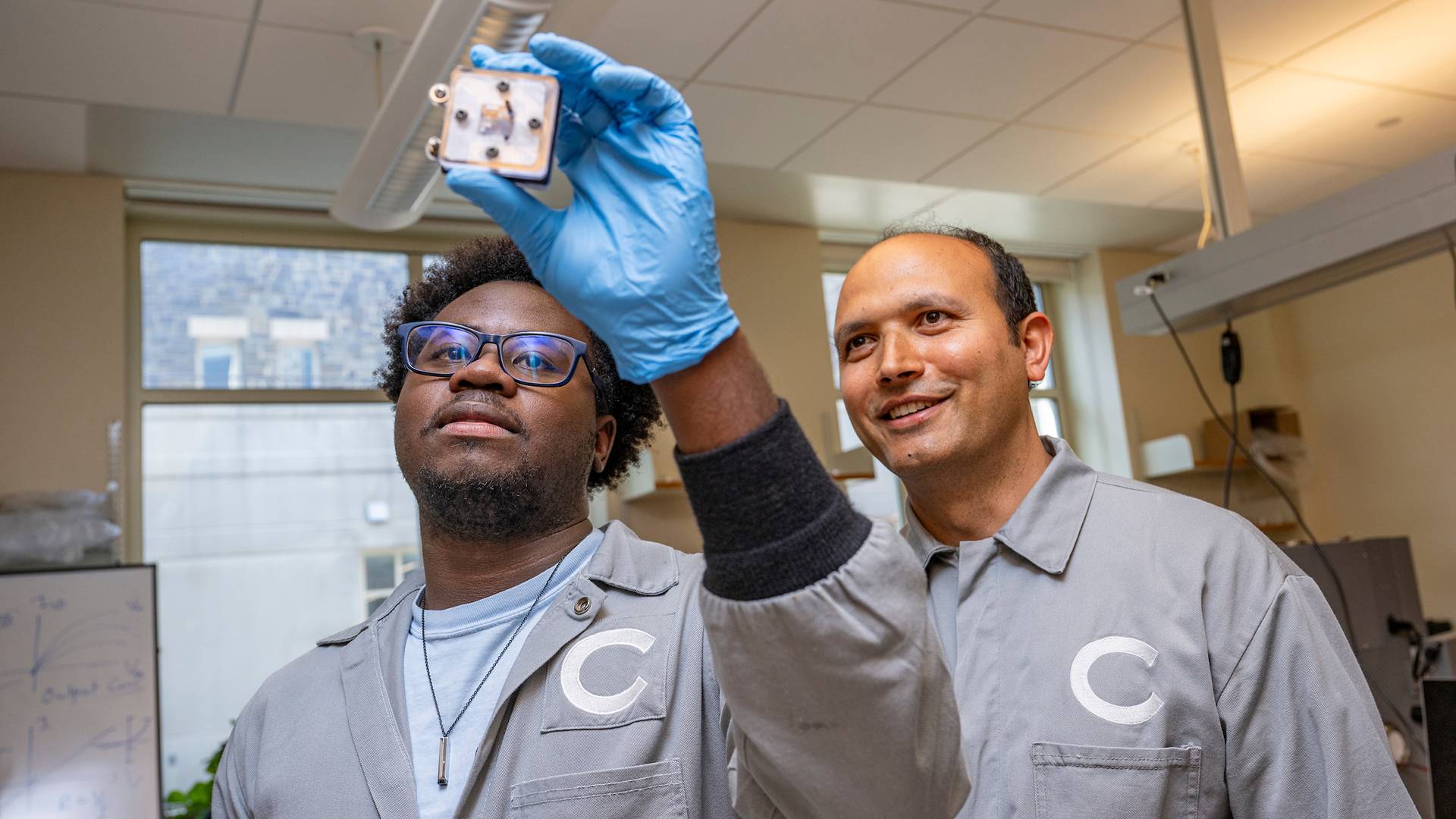
From left, Nathan Walsh ’28 and Assistant Professor of Physics Ramesh Adhikari work on a bio-based energy source (photos by Mark DiOrio)
Assistant Professor of Physics Ramesh Adhikari has been developing a bio-based energy source from materials that are right under our feet: leaves.
His research focuses on using leaves as material for electronics and developing amino acid- and peptide-based materials to conduct electrons and ions. He hopes to reduce the carbon footprint of electronic waste by providing a more sustainable and bio-based source of energy for commercial electronics.
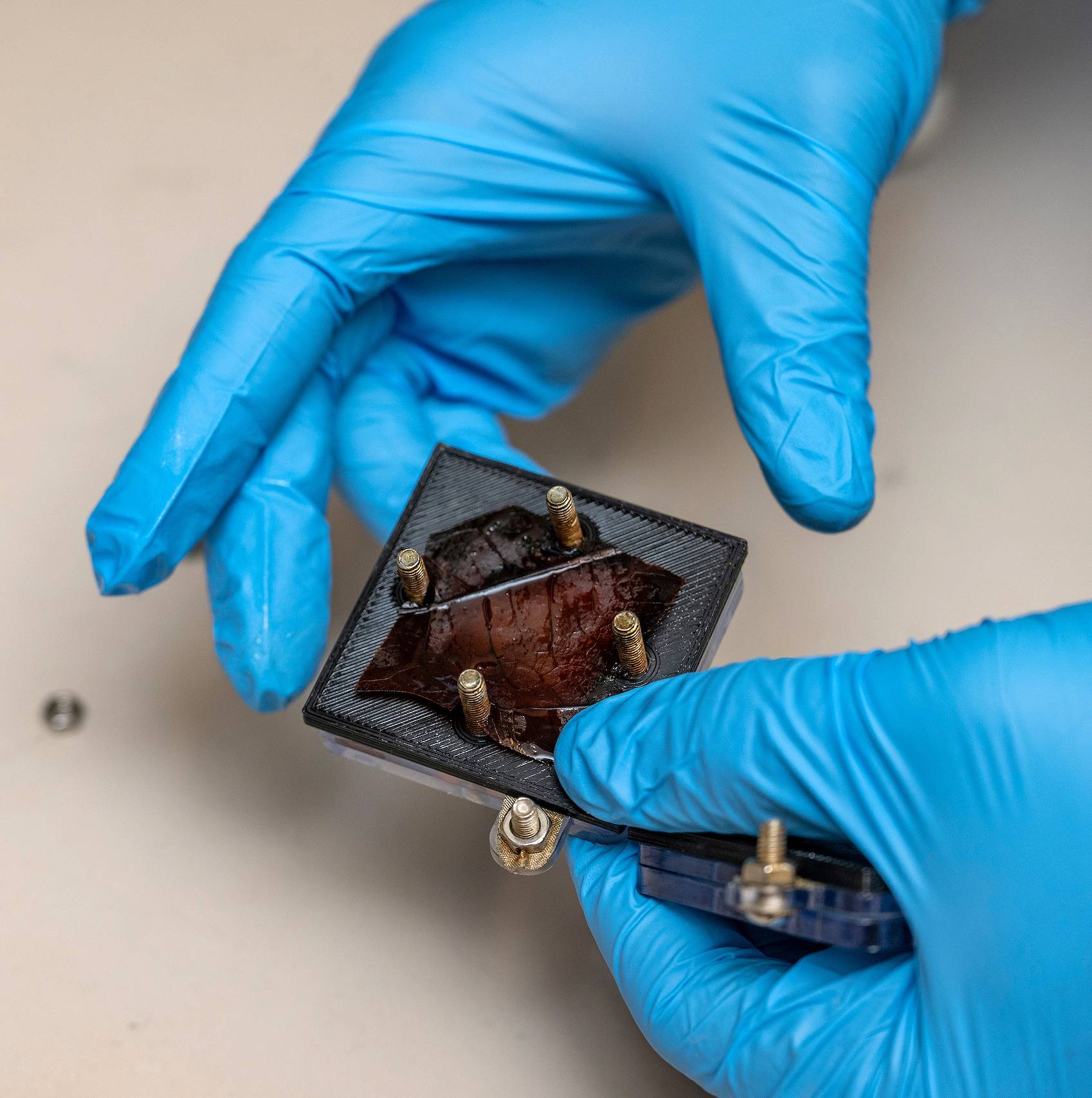
In an interview with Colgate Magazine last August, Adhikari described his efforts to make batteries from leaves, using aluminum and carbon fabric as electrodes and using water as fuel. Since then, experimentation has shown that the aluminum corrodes over time and becomes unusable, and water found in leaves evaporates too quickly. Adhikari is currently working to find a nonreactive electrode to prevent corrosion issues and constructing a device that will prevent excessive evaporation.
Much of this effort is funded through a grant from the U.S. National Science Foundation (NSF), which has allowed Adhikari to purchase equipment, parts, and consumables. His NSF funding has also made it possible to hire and mentor students to work in his lab throughout the academic year and into the summer.
To help with his original research, Adhikari hired Neha Viradia ’25, who is now a PhD student in the Department of Electrical and Computer Engineering at Northeastern University. After Viradia graduated, Nathan Walsh ’28 joined the lab and is now researching how leaves can be used with a salinity gradient to generate power.
“Our goal with this project is to continue to work toward increasing the amount of power the device can generate while making the device functional for a long period of time,” Adhikari said. “The ability to maintain constant high current and voltage output for weeks or months would make these devices more attractive for any commercial applications.”
Listen to the full interview with Adhikari on 13 podcast.