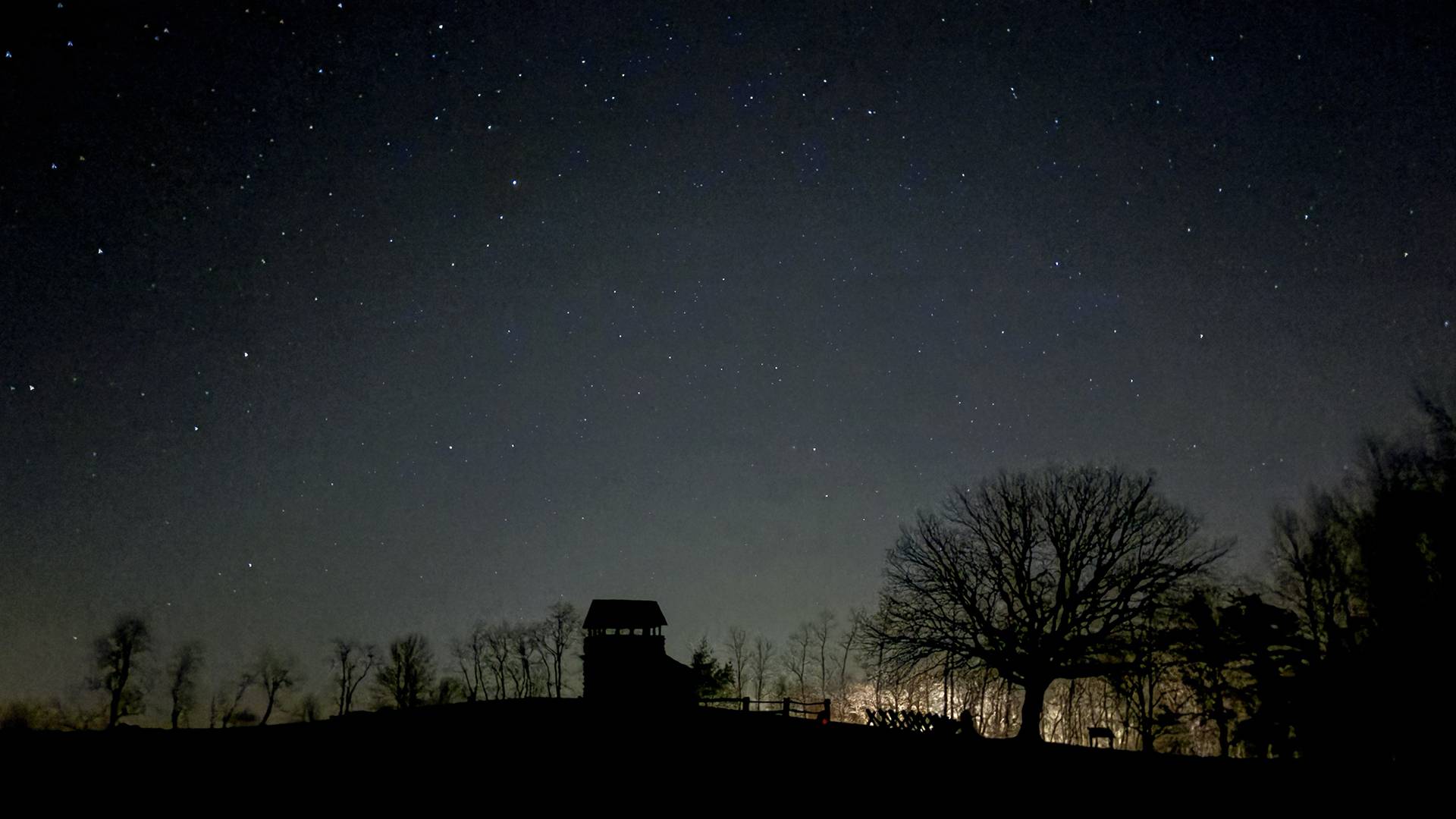
For many members of the Colgate community, one of the most cherished features of campus is its night sky. Students arriving from large cities, where stargazing is limited, especially appreciate the ability to look up at a sky filled with bright, visible stars — something becoming increasingly rare due to light pollution.
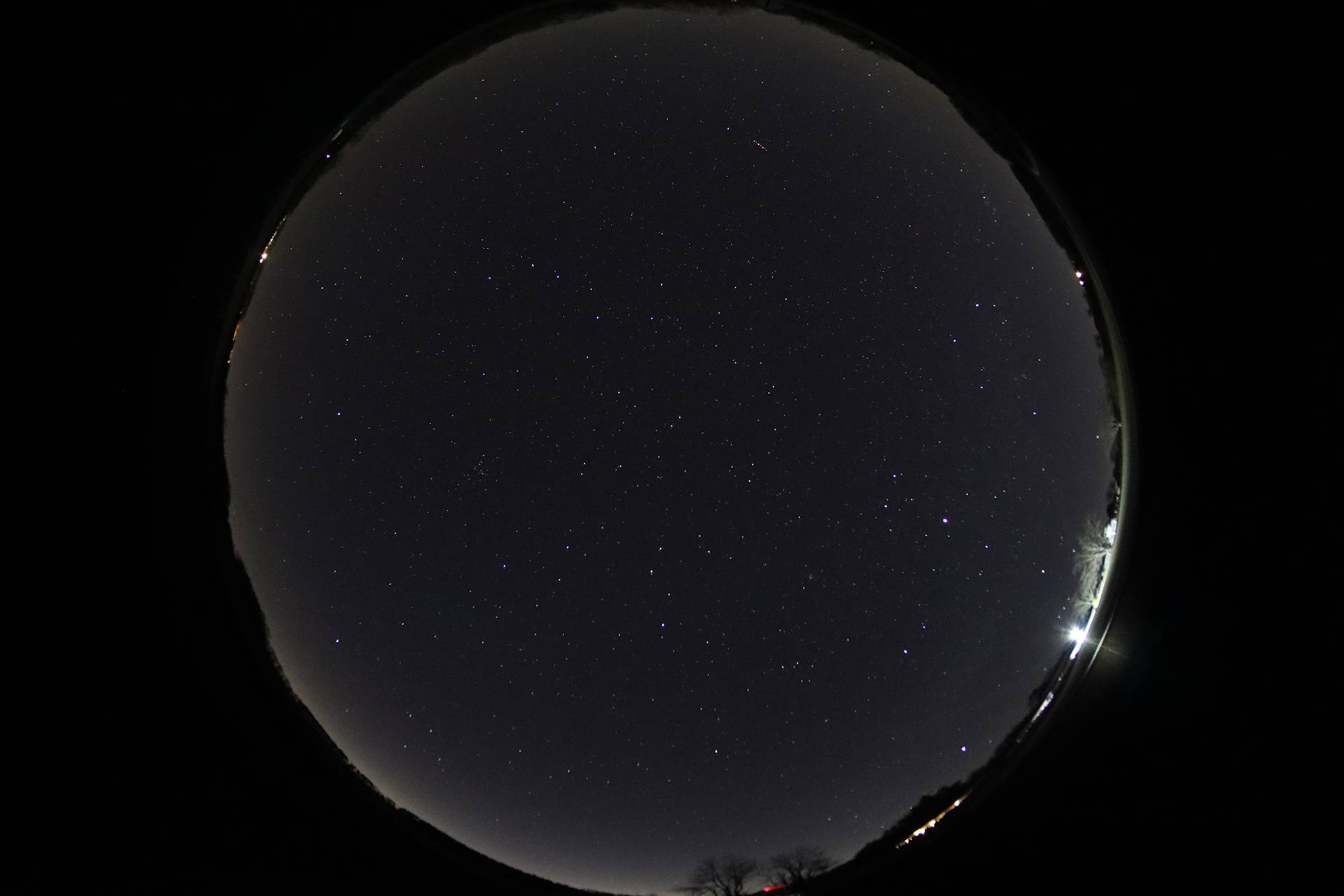
“Dark skies” refers to areas minimally impacted by artificial light, and such skies are becoming harder to find as light pollution intensifies worldwide, dimming the stars and negatively impacting ecosystems.
Jeff Bary, Sweet Family Chair and professor of physics and astronomy, has made preserving dark skies a personal mission. Being from Appalachia, raised in West Virginia, Bary grew up under the dark skies he now sees disappearing.
“People for thousands of years have had these intimate connections to the night sky, and we are losing that on a grand scale over a short period of time,” Bary said.
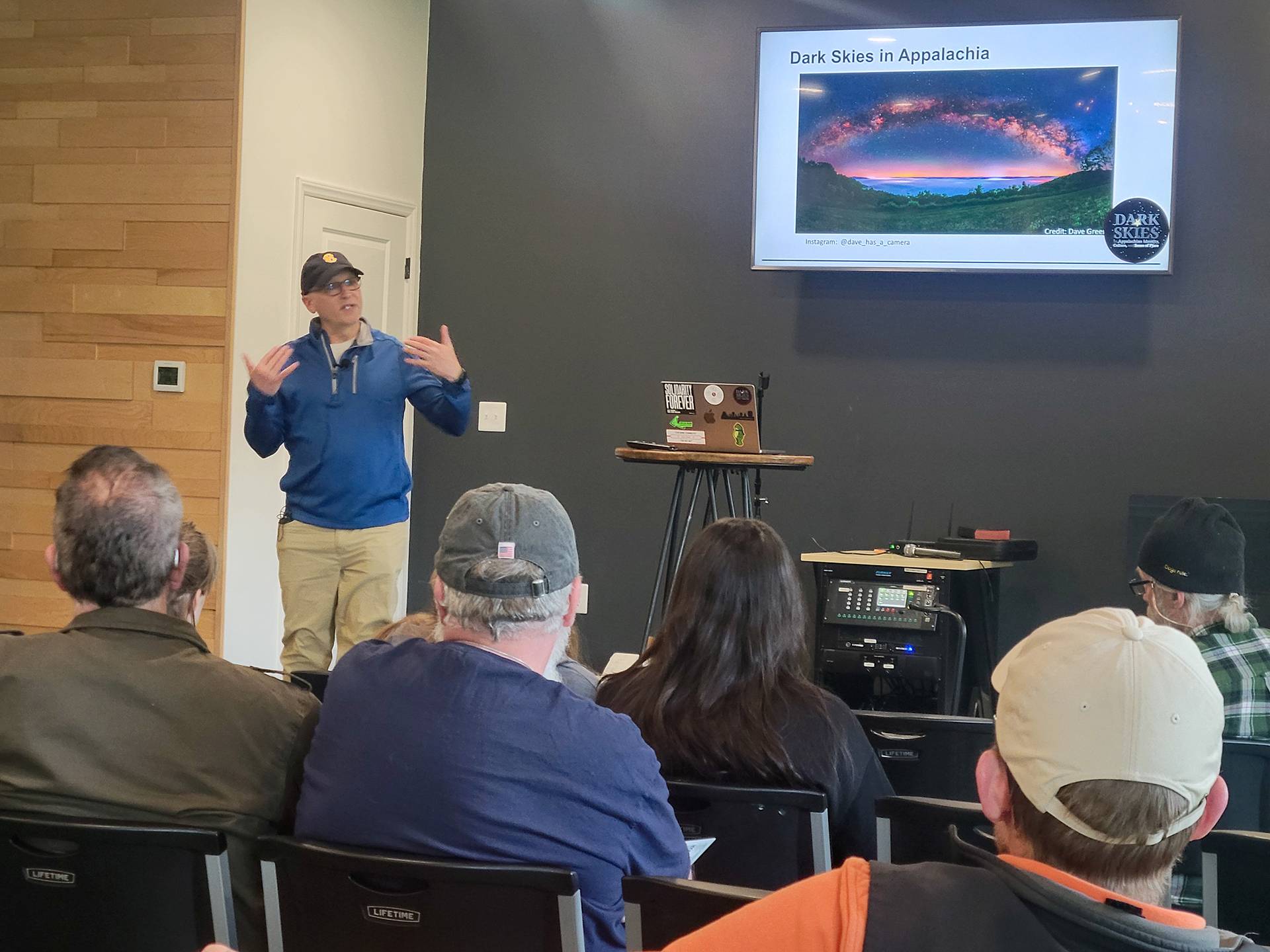
Bary’s work on the issue began through a multidisciplinary lens. After being awarded the Sweet Family Chair in 2022, he hosted a symposium, “Dark Skies in Appalachian Identity, Culture, and Sense of Place,” that brought together a wide range of voices from poets and composers to filmmakers and astronomers.
“It was so radically multidisciplinary, everyone in the room was doing different things from one another,” Bary said.
That experience led to further collaboration on the topic. While speaking at a session of the Appalachian Leadership Institute dedicated to “Building Regional Culture and Tourism,” Bary connected with George Ivey, director of the Blue Ridge Parkway Foundation, which had received a grant from the Appalachian Regional Commission that included funds to assess the night sky conditions along the 469-mile parkway spanning Virginia and North Carolina. From that partnership, the Dark Skies Survey was born.
The project focuses on gathering data on sky brightness at different points along the parkway — information that will be mapped out and analyzed to identify both areas of concern and locations with exceptionally dark skies. These findings could help communities reduce light pollution and potentially earn dark-sky certification through Dark Sky International.
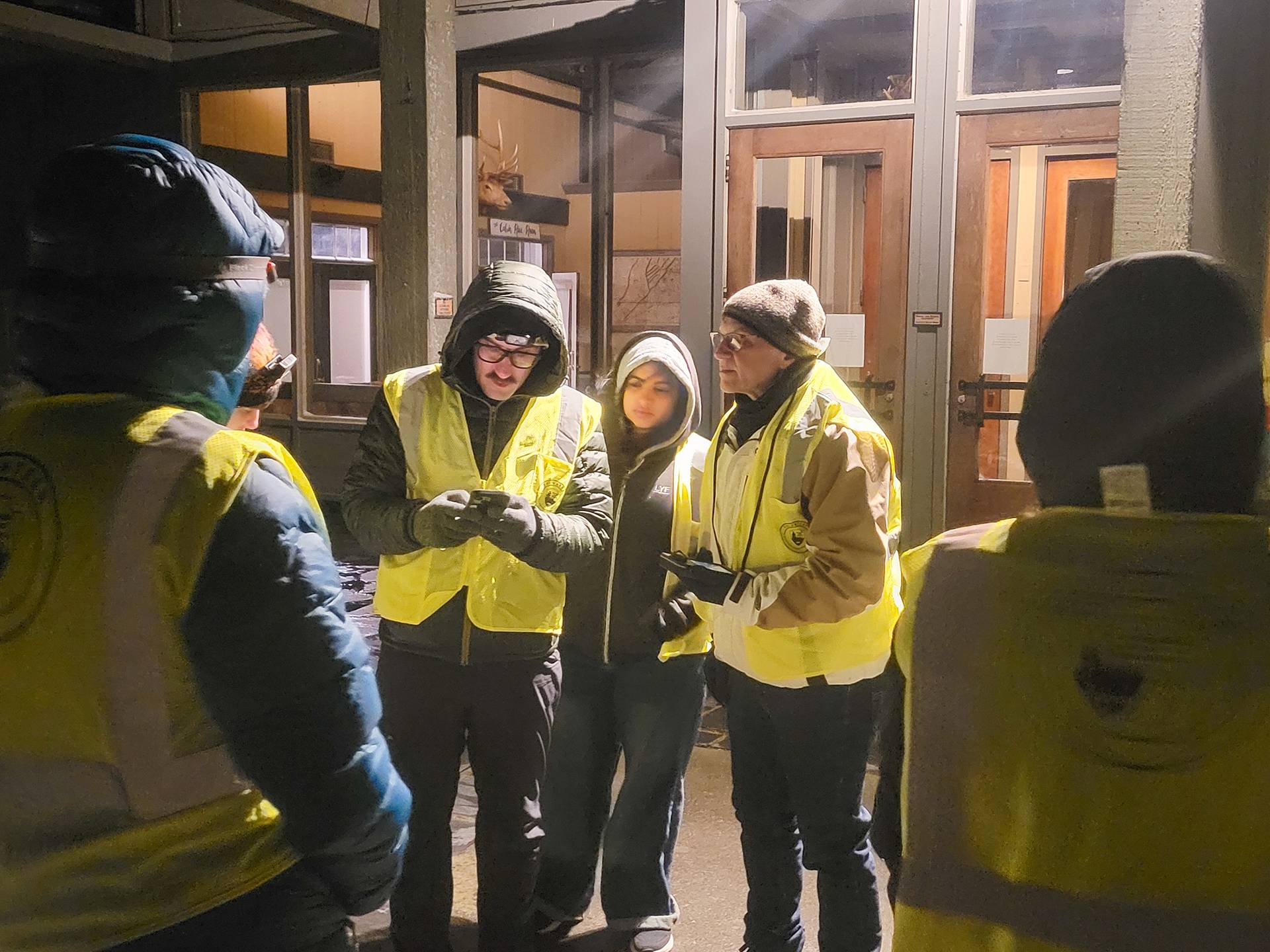
Bary decided to incorporate an educational component into the project, inviting Colgate students to spend their spring break collecting data while exploring Appalachian culture and landscapes in Virginia. The group included six Colgate students, Bary, Professor of Geography Mike Loranty, as well as students and faculty from Wellesley College.
People for thousands of years have had these intimate connections to the night sky, and we are losing that on a grand scale over a short period of time.
Prof. Jeff Bary
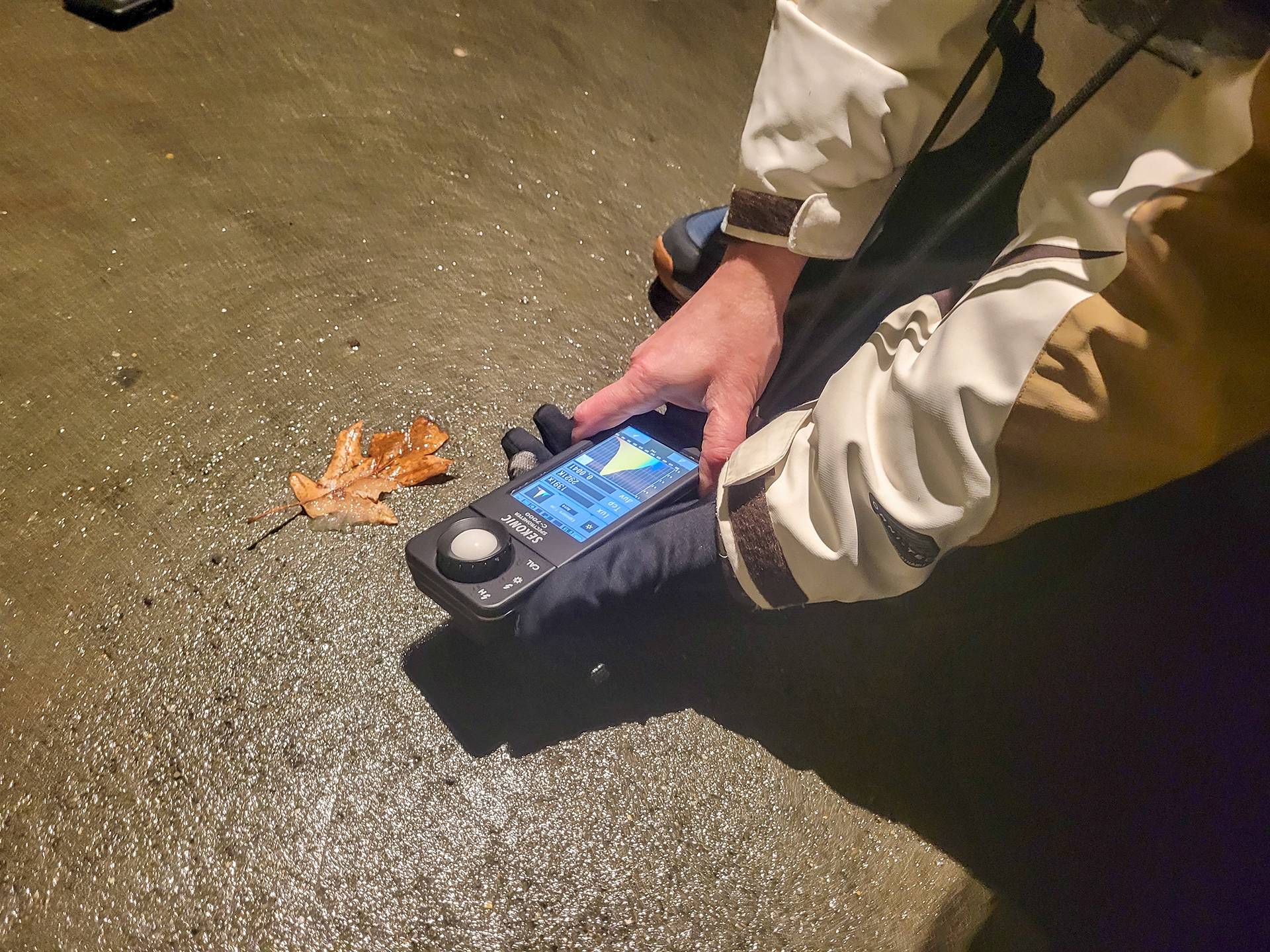
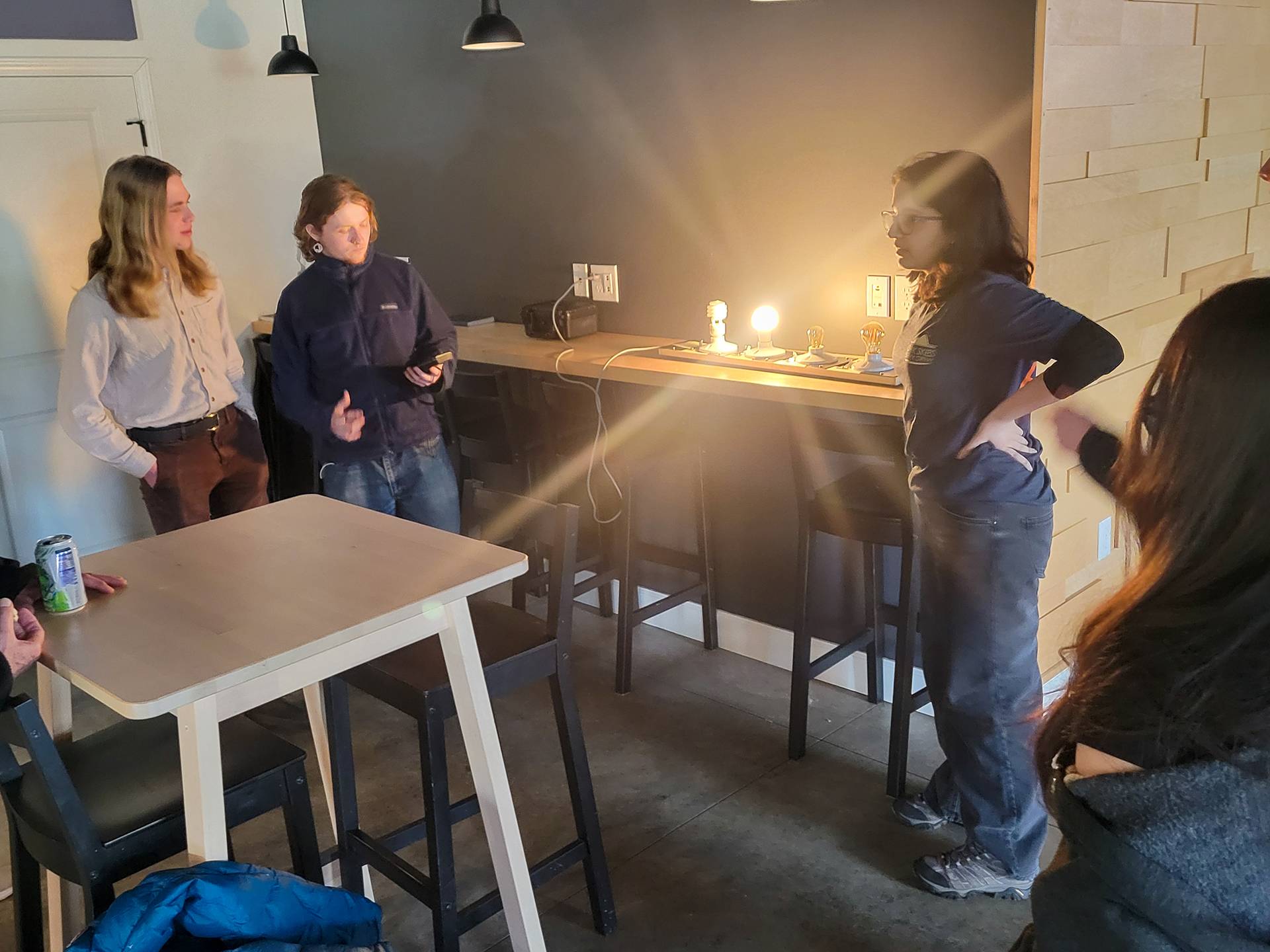
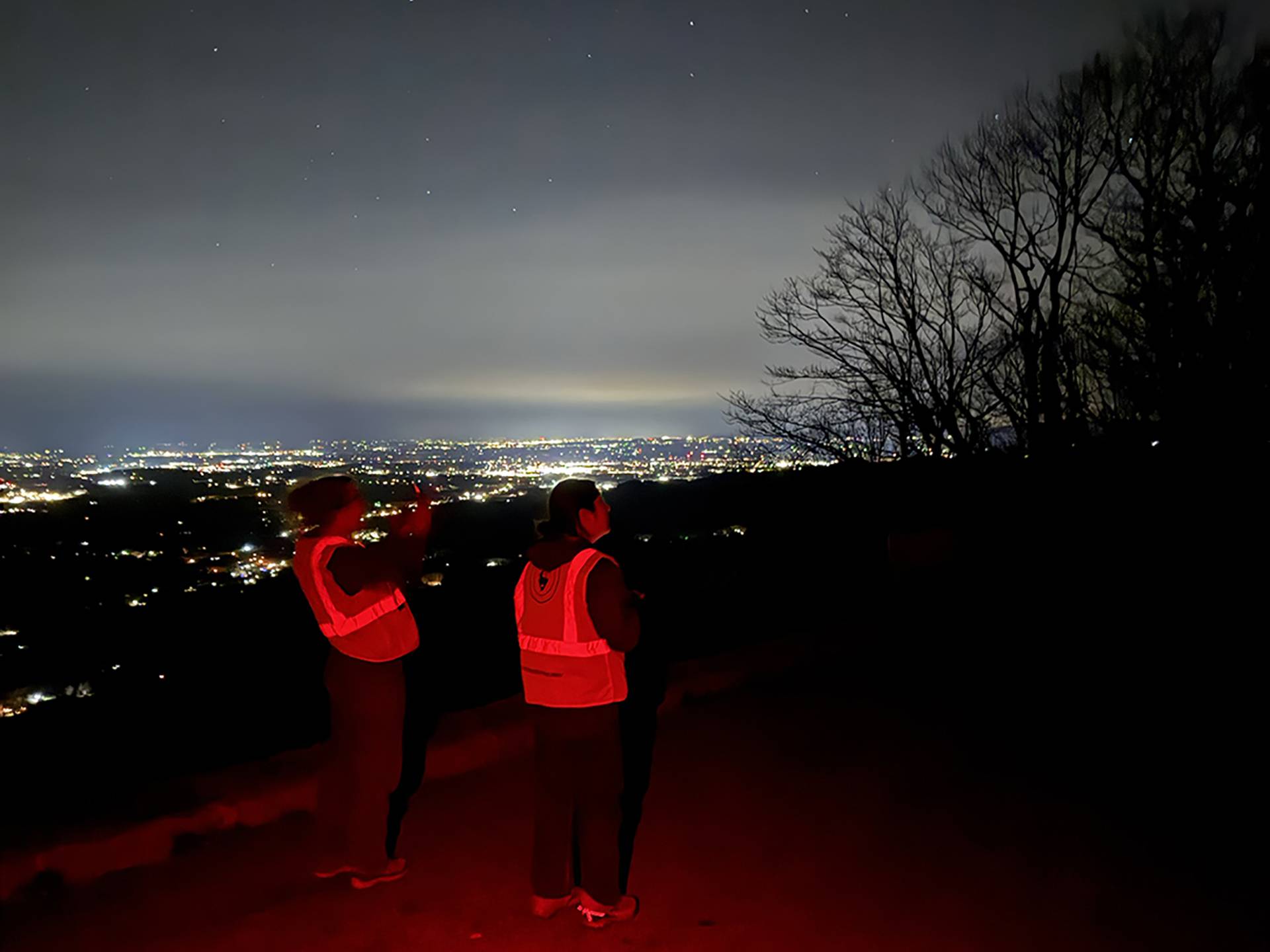
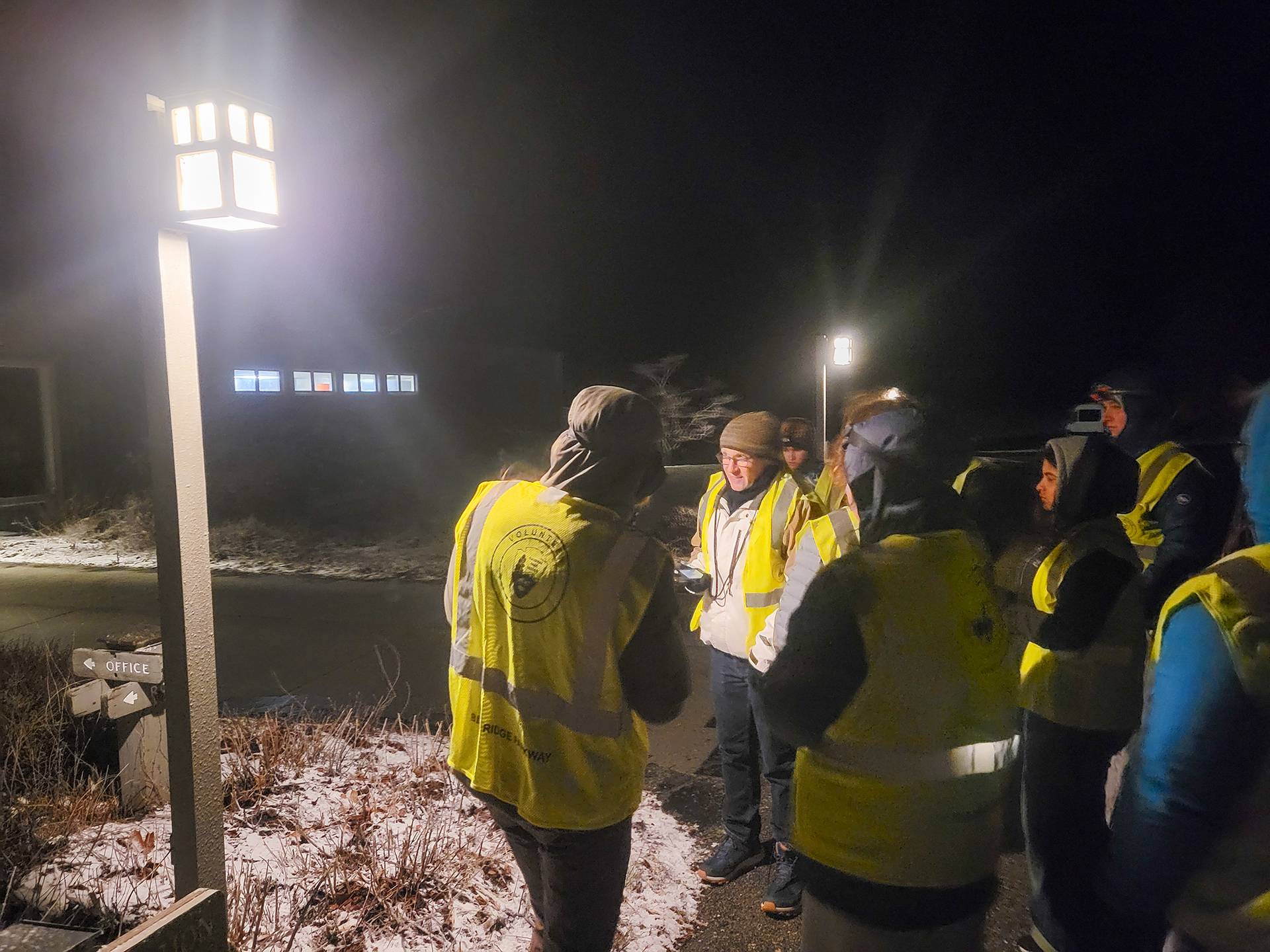
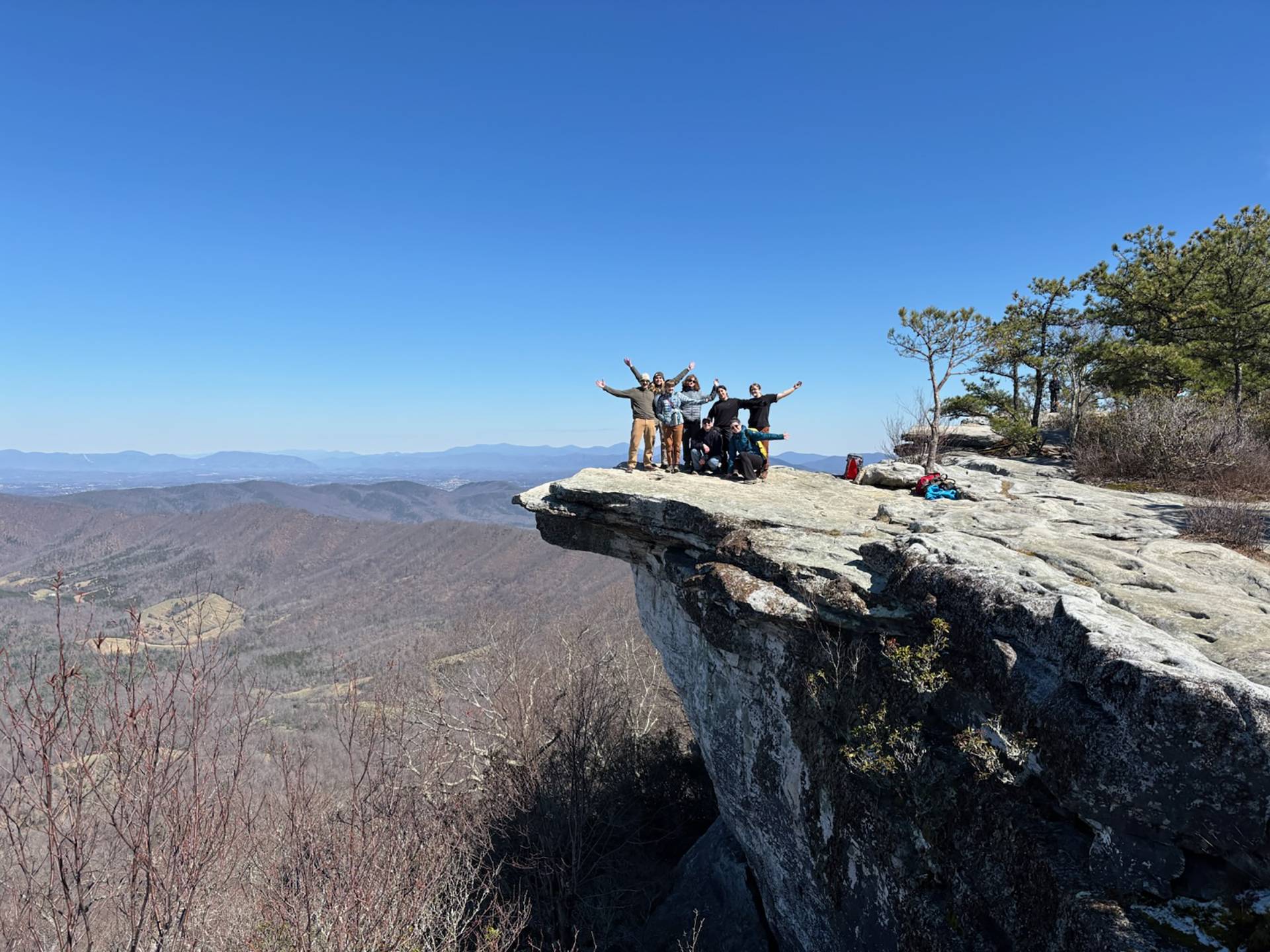
Over the course of the trip, the group covered approximately 120 miles of the Blue Ridge Parkway. At night, they stopped every few miles to measure sky brightness using specialized detectors and inventoried lighting at visitor centers and lodges along the Parkway. During the day, they hiked sections of the Appalachian Trail, went ziplining, sampled regional food and music, and danced at a Friday night jamboree at the famous Floyd Country Store.
“Some of the best moments were during the hikes we took throughout the week,” said junior Connor Rogers, a biology major who joined the trip after learning about it in a course taught by Loranty. “We all bonded as a group while experiencing beautiful scenery.”
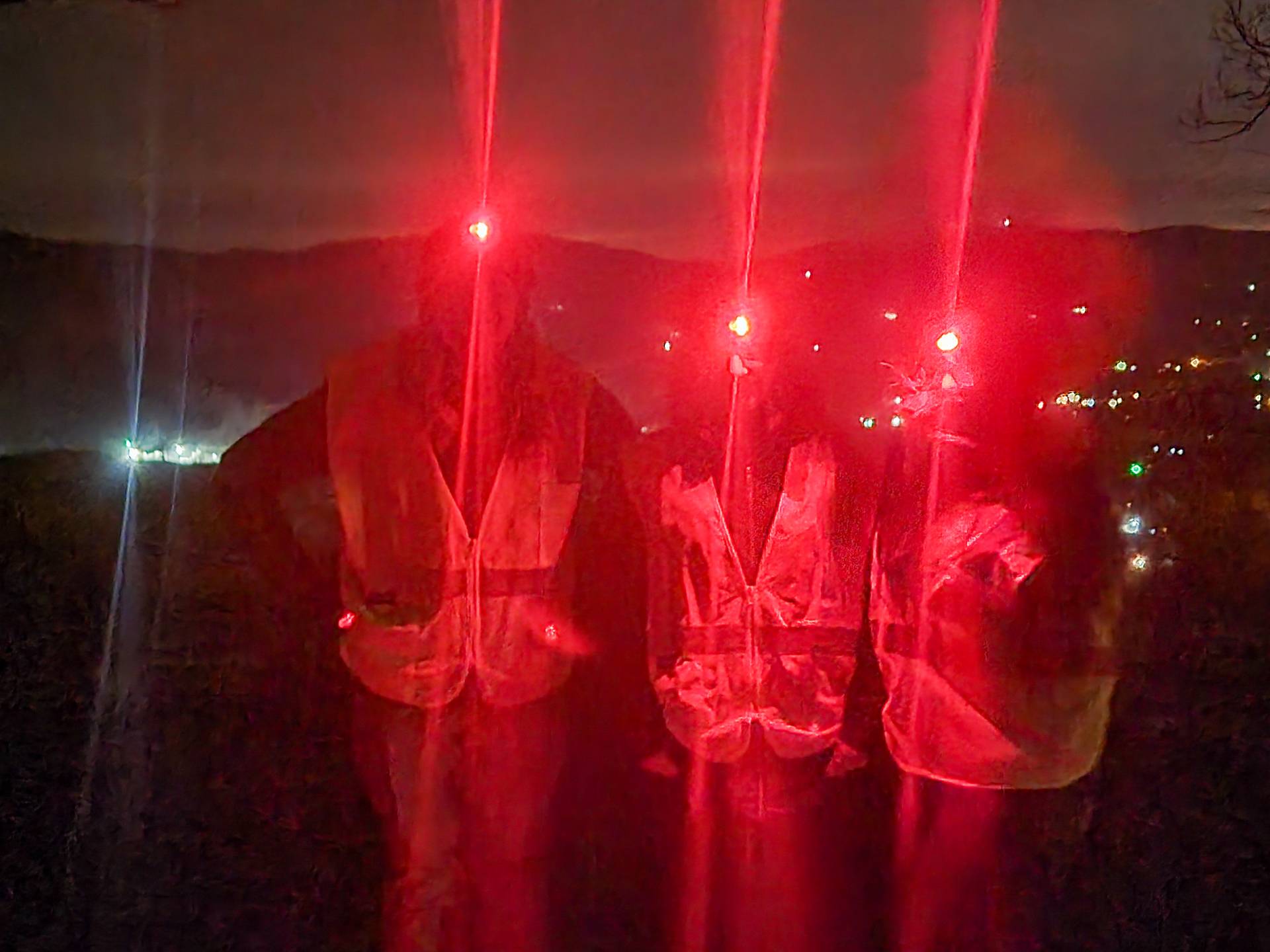
Senior Kate Murphy, who has taken Core Appalachia with Bary and Loranty and participated in a previous trip to the region, described one particularly memorable night collecting data near the North Carolina border.
“We stood in silence for a long time at one of the pull-offs, just observing the night sky,” Murphy said. “The night sky was so dark, and as Professor Bary pointed out various stars, I realized what an astounding opportunity this was.”
In addition to data collection, the group hosted community meetings to educate residents about light pollution and offered practical ways to reduce it. For Loranty, who attended school in West Virginia and has since been deeply connected to Appalachia, those moments were especially meaningful.
“The community meetings were really interesting because there were a lot of people in the region who care about this,” Loranty said.
He said that these conversations underscored a broader point about why dark skies matter.
“The night sky has positive mental and physical health benefits that are harder to quantify, but extremely important, along with being an ecosystem service,” Loranty said.
Bary echoed this sentiment, reflecting on the deeper human significance of dark skies.
“There is a real sense of awe people get from experiencing a truly dark night sky,” said Bary. “With that, there is this sense of perspective that comes with it that we all need: that there’s something larger than ourselves that also connects us to one another in ways that transcend space and time.”
The data collected during the trip will contribute to a larger, ongoing effort involving partner institutions, including the University of North Carolina-Asheville, Appalachian State University, Western Carolina, Mayland Community College, Radford University, and the University of Virginia as well as amateur astronomers. Loranty will be assisting with the mapping of the data that will help identify optimal stargazing locations as well as areas where lighting practices could be improved.
Beyond its impact in Appalachia, Bary hopes the project will inspire reflection closer to home. “I hope that getting students involved will get them thinking about their environment here on campus because there are things that we could do here to improve the skies and our local environment,” Bary said.