
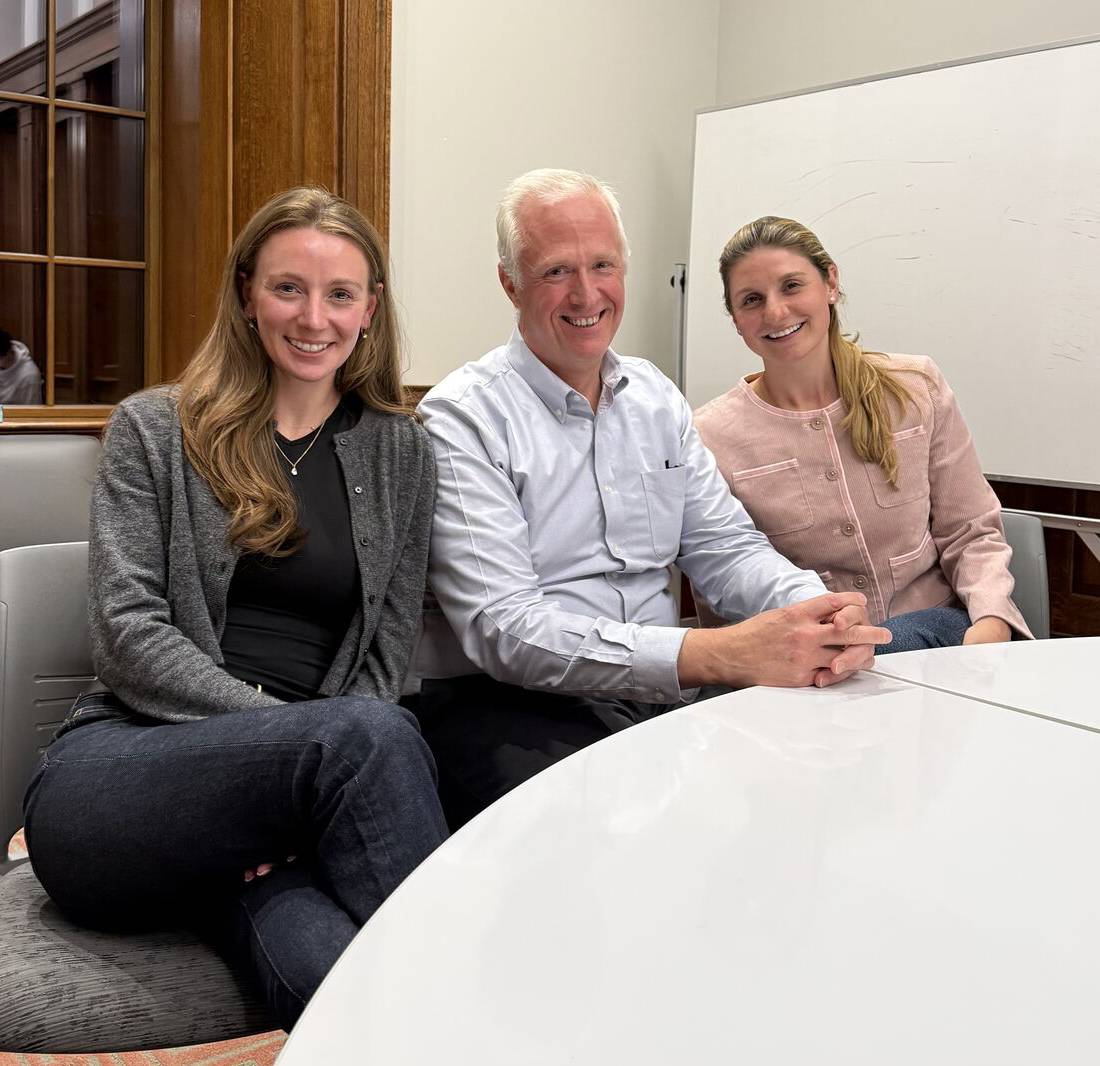
In April, Lindsey Glass ’19 and Brooke Sweeney ’19 returned to campus to join Doug Johnson, dean of academic and curricular affairs and William R. Kenan Jr. Professor of psychological and brain sciences, for a conversation with students in his seminar, Attention: William James to TikTok, on psychology, the rise of artificial intelligence, and attention as both a psychological process and a professional resource.
PSYC 300 is an upper-level seminar on the psychology of attention that begins with William James’ classic account of attention and then follows the field through landmark research on selective attention, distraction, working memory, automaticity, and the limits of multitasking. The course connects those scientific ideas to contemporary questions about smartphones, social media, artificial intelligence, and the attention economy. It asks students to consider how modern technologies place new demands on attention and how attention, in turn, shapes learning, judgment, communication, and work.
Professor Johnson invited the pair to speak with his students about navigating attention in their professional lives. As a partnership leader at Mastercard, Glass manages relationships between major global technology companies to build innovative solutions and payment strategies. Sweeney works with enterprise clients to produce tangible value from their organizational goals as a customer success manager at monday.com.
Johnson says that his goal is to “help students see that attention, communication, judgment, learning, and adaptability are central to how people work and make decisions in modern professional environments.”
Johnson chose Glass and Sweeney because of their academic connection during their time at Colgate. Both completed their senior theses in his lab, with Glass working on attention science and Sweeney studying metacognition in students’ study habits.
“Johnson is Brooke’s and my favorite professor from Colgate,” Glass said. “We have stayed in touch consistently since graduation and have always wanted a reason to come back and speak to students! When Johnson asked us if we’d join, it was an easy yes.”
Johnson also factored in career choices in his decision to invite Glass and Sweeney back to Colgate to speak with his current students. He emphasized that they are excellent examples of psychology majors who have taken a liberal arts education into fast-changing professional settings where technology, communication, human behavior, and organizational problem-solving intersect.
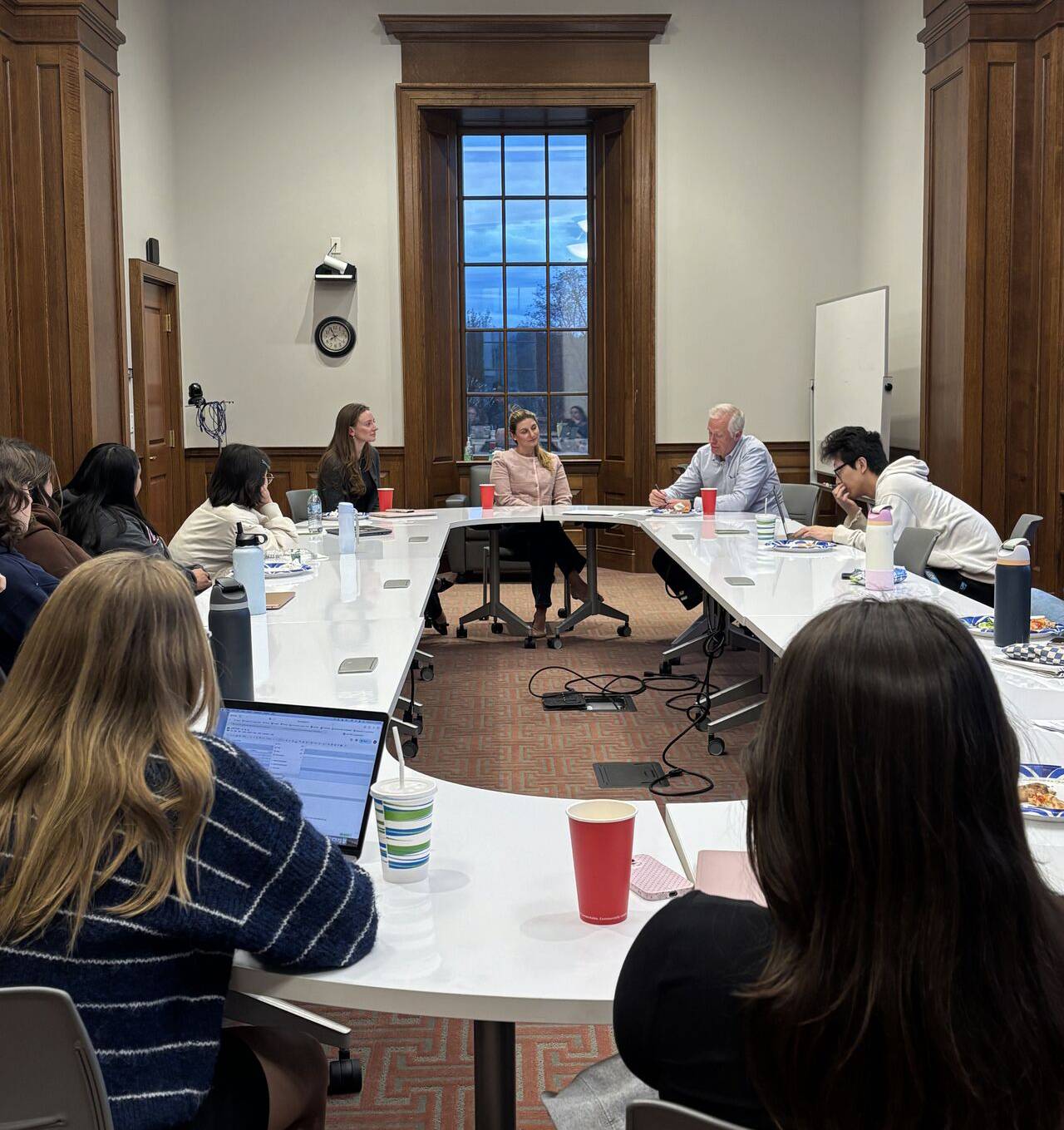
The alumnae drew on their work experiences in their conversation with Johnson’s class. “Understanding what captures attention, what creates friction, and what motivates behavioral change is central to my day-to-day,” said Sweeney. The pair discussed how the evolution of AI in their workplaces has shifted their teams’ attention toward critical thinking and problem-solving strategies. They both encouraged current students to consider how AI may impact their own careers and to stay curious about the growing technology around them.
As his students advance in their careers, Johnson hopes that this conversation — and the Colgate experience in general — will help them be more mindful about the complexities of attention beyond the classroom.
“It is one thing to read about attention, distraction, working memory, AI, or the attention economy in academic articles. It is another thing to hear recent alumni describe how those issues show up in their daily work,” he says. “A Colgate liberal arts education prepares our graduates for lifelong learning and for the ability to handle disruptive and transformative innovations throughout their careers.”