On a table in Alumni Hall, a small Iqiqu figurine stands with its mouth open, arms outstretched, and surrounded by miniatures of everyday objects. This statue of Iqiqu, the Tiwanakan god of abundance, is an essential part of the Bolivian Alasitas Festival.

The Alasitas Festival is celebrated at Colgate as a collaboration with the Longyear Museum of Anthropology and the Native American and Indigenous Student Alliance (NAISA). The annual festival originates with the Aymaran people of the La Paz region of Bolivia and is a monthlong celebration beginning Jan. 24. During the festival, people create or buy miniatures of what they wish to attain in the following year and present them to Iqiqu.
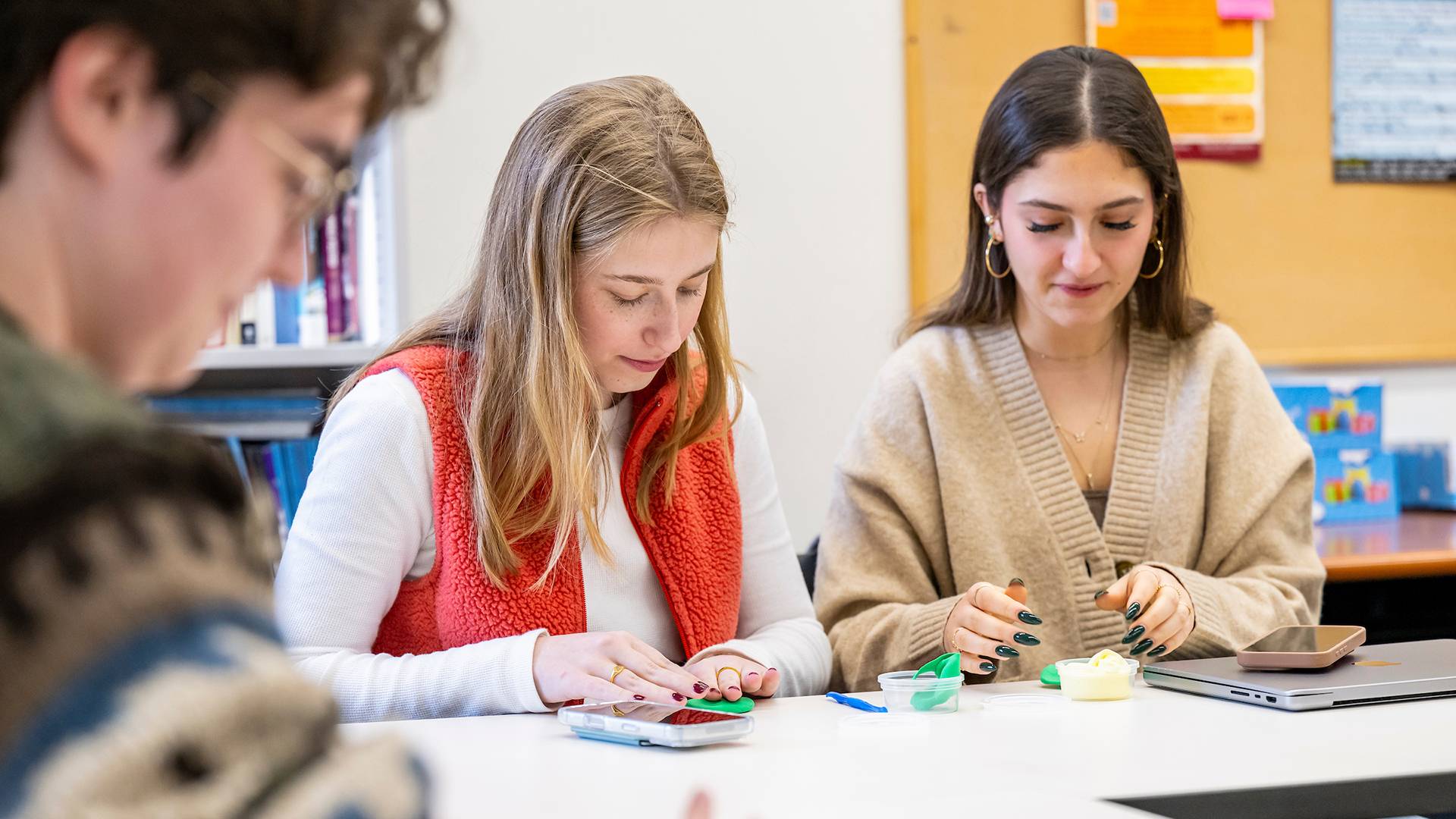
Alasitas is now in its second year at Colgate, and the community joined together to create clay miniatures of their wishes for the coming year to present to the Longyear Museum’s model of Iqiqu. Miniatures can range from money, cars, and houses to representations of peace.
As the god of abundance and son of Mother Earth, another key aspect of the festival is to care for the spirit of Iqiqu by bringing offerings of food and other natural items. At Longyear this happens on Fridays at noon.
Jai Adams ’27, a member of NAISA and an organizer of the event, commented that this year, “many asked for community welfare, peace, or aspirations for other people. It’s heartwarming to see people approach Iqiqu with genuine curiosity and respect, and knowing that their offerings contribute to his welfare.”
In Bolivia, Iqiqu statues can be found in public spaces, homes, and even churches. At noon on the first day of Alasitas, the miniatures are blessed by local spiritual leaders. This tradition showcases a combination of the Indigenous Aymaran culture and Catholicism that characterizes Alasitas celebrations.
“Most people who attended Alasitas are from a wide array of cultures and religious backgrounds that aren’t Bolivian or Aymaran, myself included,” Adams says. “People will always bring a part of themselves or their culture to these events; that’s part of the charm.”
Alasitas offerings will be maintained throughout the festival until mid-February, where Iqiqu can be found within Alumni Hall, surrounded by his miniatures. Students are encouraged to participate and to add offerings throughout the festival.
“It feels good to care for our collections in ways that are culturally appropriate,” says Rebecca Mendelsohn, co-director of University Museums and curator of the Longyear Museum of Anthropology. “Too many belongings have been stripped from their context and their ‘aliveness’ when they enter museum collections. This tradition is one small way that we are trying to honor a work in our collection that may have otherwise felt out of place here at Colgate.”