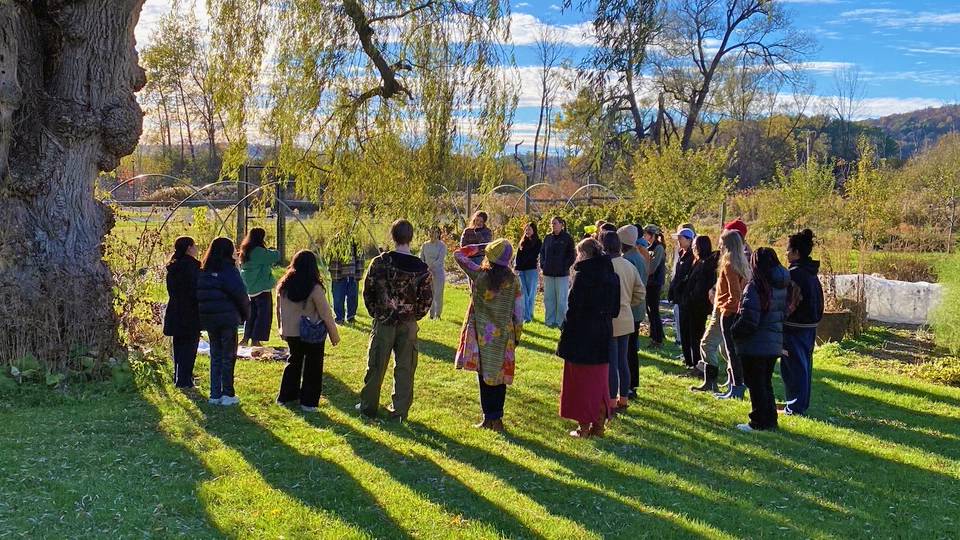
Students working together to make kimchi, sauerkraut, kombucha, tempeh, and sourdough learned how fermentation creates transformation through communities of bacteria and what humans can learn from food and from one another.
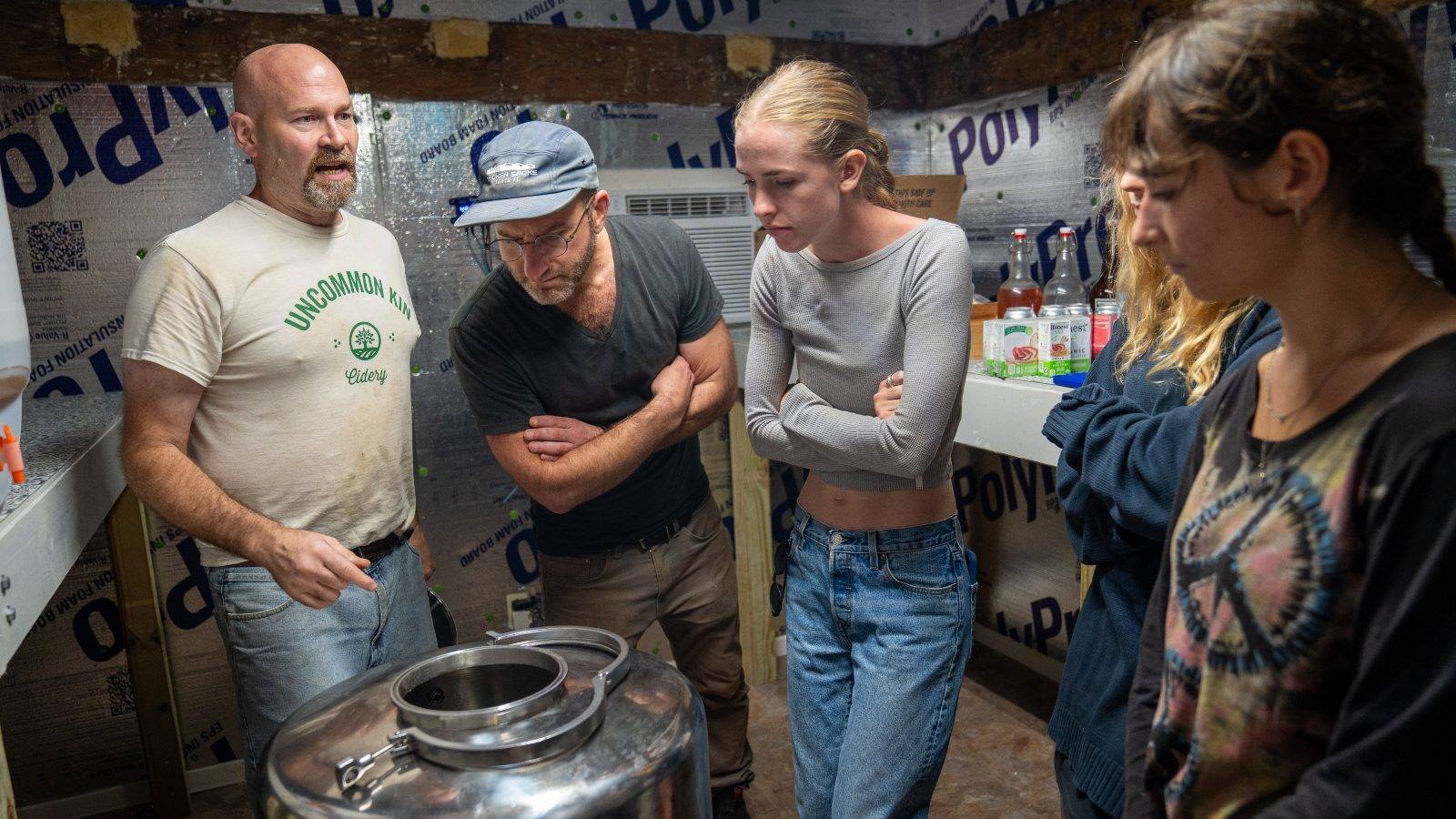
Educational studies professor Mark Stern said the bulk of his fall 2025 course, EDUC 326: Fermentation and Multispecies Pedagogies, took place outside of the classroom, including visits to Flour & Salt to bake sourdough bread, the Colgate Community Garden, and Uncommon Kin Cidery in New Berlin.
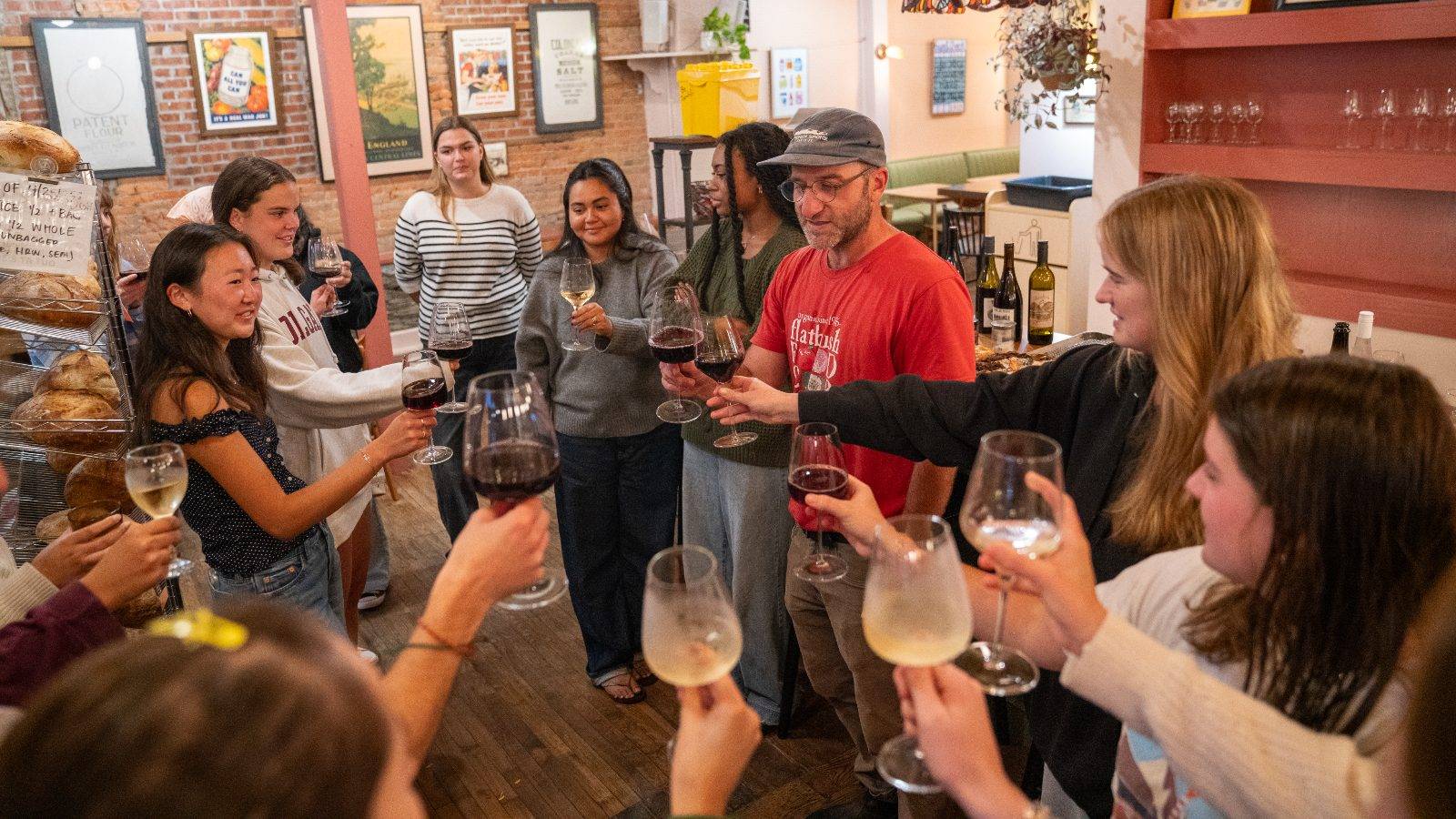
Stern described the human part of the fermentation process as “one of attunement and care” as the class observed their crocks and jars for temperature, oxygen, and moisture, using touch and smell to monitor their ferments.
“There are a lot of important things we can learn from this process about not only how humans can create community with more-than-human entities, but about how humans think about what it means to be human and get on with other humans,” Stern said. “Fermentation and bacteria offer us a unique lens to think about everything from sexuality to morality to non-human-centric cosmologies.”
In addition to their group fermentation projects, students also created their own “Filial Ferment” — choosing a recipe with a personal connection to their cultural, ethnic, religious, racial, or geographical history. Stern has combined their projects into a class cookbook featuring all of the students’ recipes along with their personal connection to the ferment.
Racquel Baldeo ’26 brought a small sample of the Trinidadian pepper sauce with Scotch bonnet peppers, carrots, and garlic she made with her mother over Thanksgiving break to share with the class. She said preparing the pepper sauce with her mother helped her recognize how food was able to connect her with a place when she was home, eating the special foods her mother prepared.
“That’s what makes home, home — my access to that food,” she said.
When she first went to boarding school, Baldeo said she felt far away and disconnected, until her mother brought her food from home and she was able to share it with her friends. She said the class, especially the Filial Ferments project, made her realize those emotions and memories she felt eating food from home actually weren’t that far away.
“This is something I could and did make so easily,” Baldeo said. “I feel like now this can go with me anywhere I go, the knowledge of how to make and prepare this food.”
“That can be a powerful way of looking at the world at a time when things look bleak. We can ferment. We can make miso. We can be a part of a community that sows the seeds for a future.”
Prof. Mark Stern
A writing project for the course focused on the relationship between food and memories. Students were asked to share their personal connection and emotions around a specific dish, taste, or smell with special significance in their lives.
Katrina Christopher Peel ’26 wrote about spending holidays in her grandmother’s kitchen and the shared experience of preparing and eating food together.
“Sometimes holidays can be kind of a contentious time with a lot of political beliefs or expectations about what people are doing in their lives, but no matter what, in my grandma’s kitchen, the sole focus was about food and that shared experience of making it, enjoying it, and family being together,” she said.
Katie Mulgrew ’26 said the shared activities and frequent discussions around the food they made helped build that sense of community among her classmates.
“We’re all engaged in the same thing in our own ways, and it’s such an easy conversation when we’re making sourdough or fermenting things together at the same time,” Mulgrew said. “There’s always something for us to talk about, so it feels like a very comfortable space.”
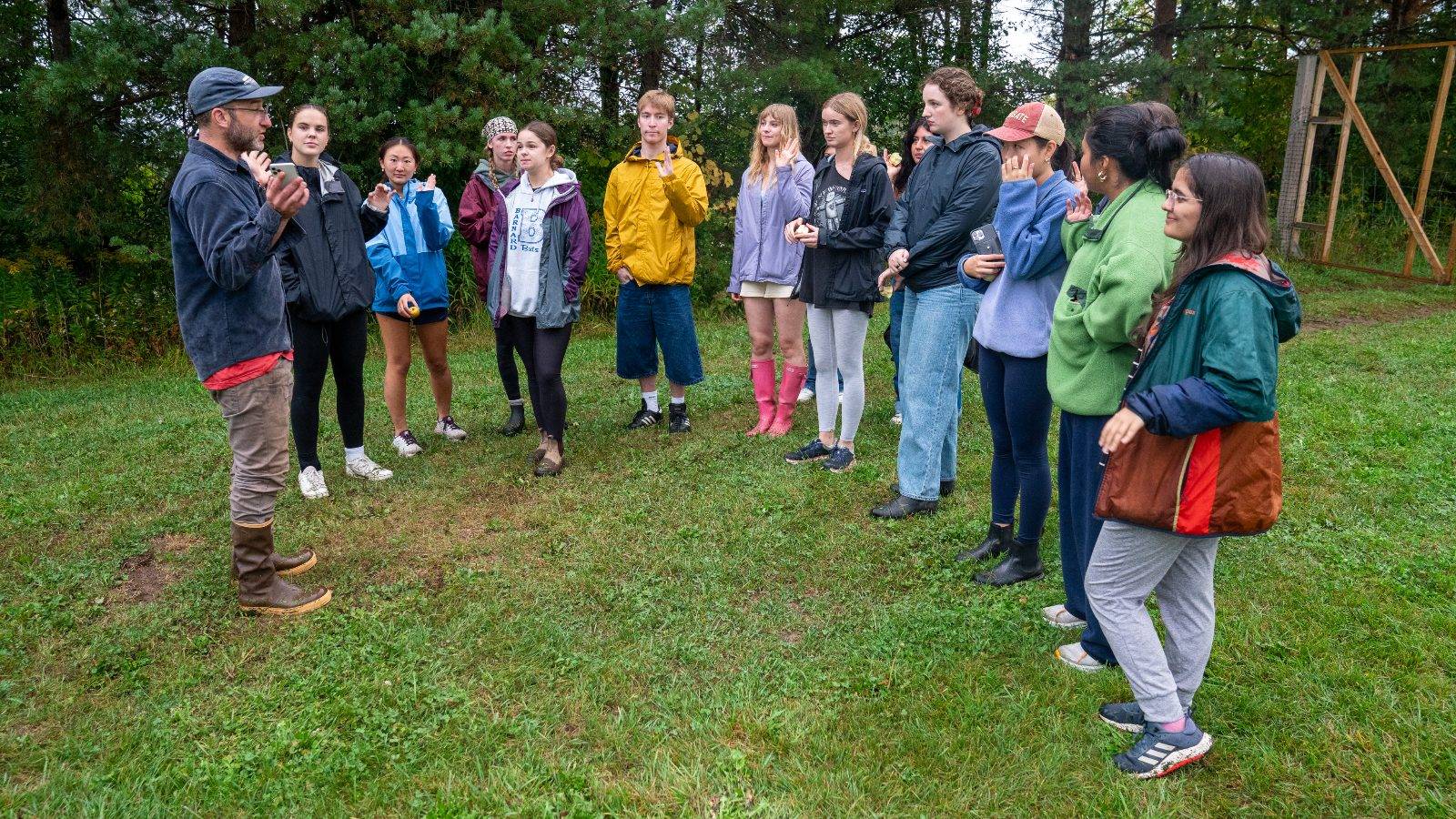
Foraging was another theme of the course, and Stern said the class learned about “all of the food and medicine that grows under our feet.” The class visited Critz Farms in Cazenovia for a tour of the cider-making facilities and to pick an assortment of apples from its cider orchard. The apples were taken to Uncommon Kin Cidery, where the class pressed them. The juice was then brought to the Lower Lake Brewery in Hamilton, where it is being brewed into a springtime beer available within the next few months.
These collaborations were made possible partly through monetary support from the Office of Entrepreneurship and Innovation. “We were thrilled to support this hands-on seminar, where students are engaged in experiential learning outside the classroom, working directly with local entrepreneurs,” said Carolyn Strobel-Larsen, director of entrepreneurship and innovation.
Students also attended a workshop in the Colgate Community Garden with clinical herbalist Antonia Estela Pérez.
“From my experiences, the foraging community is very open to sharing knowledge and helping each other with identification, processing, and caring for plants,” Stern said. “This is an important lesson for understanding community-based knowledge. Students would go in groups into the woods above campus, and we got to know where we were by getting to know who was sharing the space with us.”
Stern views fermentation as inherently hopeful because the process expresses faith in the future. He compared the immediate gratification of going to the store and picking up ingredients for a sandwich, compared to the several-month process of making miso — first cultivating the koji (a fungus) and then creating a space for that to transform soybeans into miso.
“That can be a powerful way of looking at the world at a time when things look bleak,” Stern said. “We can ferment. We can make miso. We can be a part of a community that sows the seeds for a future. In the garage of my house, these students were sitting around at 8 p.m. at night, with music on, making huge vats of sauerkraut. They were in the process of creating their future. This, I believe, is at the heart of the liberal arts project — with probiotic benefits to boot.”