
Hall of Fame surfer Bethany Hamilton delivered a keynote address at Colgate Memorial Chapel on March 10. The event was sponsored by Colgate University Church within the Office of the Chaplains. Hamilton shared her story of resilience, originally published in Soul Surfer, the autobiography that was later adapted into a major motion picture.
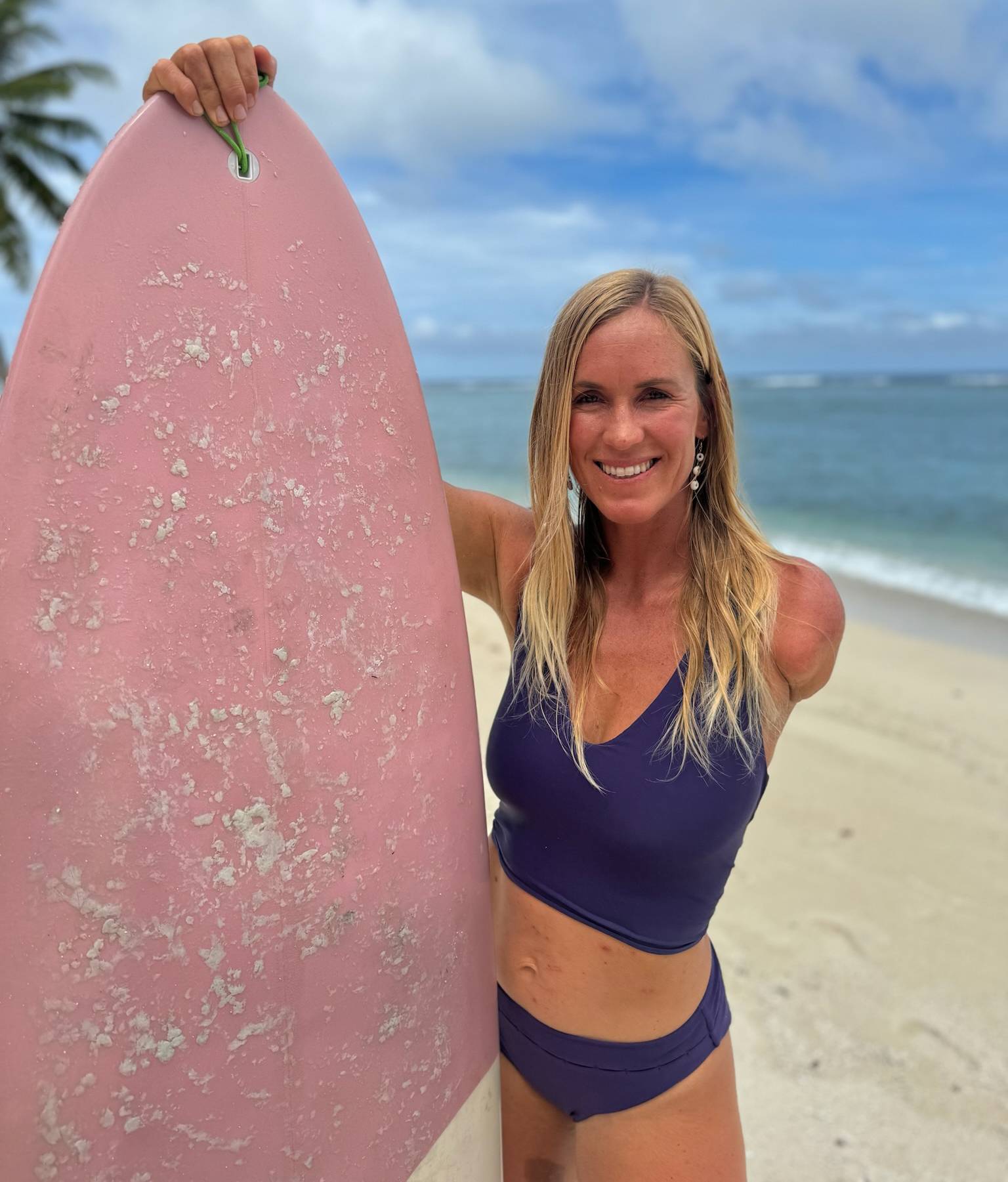
Hamilton lost her left arm in a shark attack while surfing at age 13. She recovered and went on to beat “Jaws,” the biggest surfing break on Maui, at just 17 years old.
Inviting the audience to hold their breath, Hamilton described what it is like to be pulled under while surfing — when a breaking wave’s explosive energy forces a surfer underwater. She calls this her “sleeping bag moment,” because there is nothing you can do but be pulled by the wave and wait for the water to subside. She let the audience continue holding its breath for the same amount of time that she was underwater while surfing her first wave at Jaws. Once they were breathing again, she noted that there were four more waves in the set that she encountered.
While not everyone would be able to surf Jaws, Hamilton said, “there are so many challenges that life will throw our way that can be like that sleeping bag moment.”
In describing the hurdles that she has faced, she told the full house of students in the chapel that, “throughout my life, I have picked up a lot of different roots to keep me grounded when the set waves come in. I have learned how to adapt.” For Hamilton, ADAPT stands for being Appreciative, Directed, Associated, Persevering, and Teachable.
“The practice of finding gratitude and thankfulness every single day can change the trajectory of those crazy hard seasons,” Hamilton explained. She recounted that, when she lost her arm, “I woke up so grateful to be alive.” Since that moment, her goal has been to prioritize joy and gratitude every single day to keep herself motivated. She applies the philosophy to being a mother, a wife, and a surfer.
Hamilton said that she “had to learn how to do everything over again when I lost my arm, even the little things.” She explained that to keep moving forward, she needed to feel directed — something she found within her relationship with her faith.
“We truly need connection and closeness, and we proactively build life so that we can do it with others and not muddle through on our own,” Hamilton said. For her, those connections come in the form of her family and her mentors. “I believe mentorship needs to have a comeback in our society, and everyone should have an older man or woman in their life who speaks to them about life because they have lived it.”
“It was really helpful to be reminded of appreciation and perseverance and the role they play in both academics and social life,” said Isabella Jardine ’29.