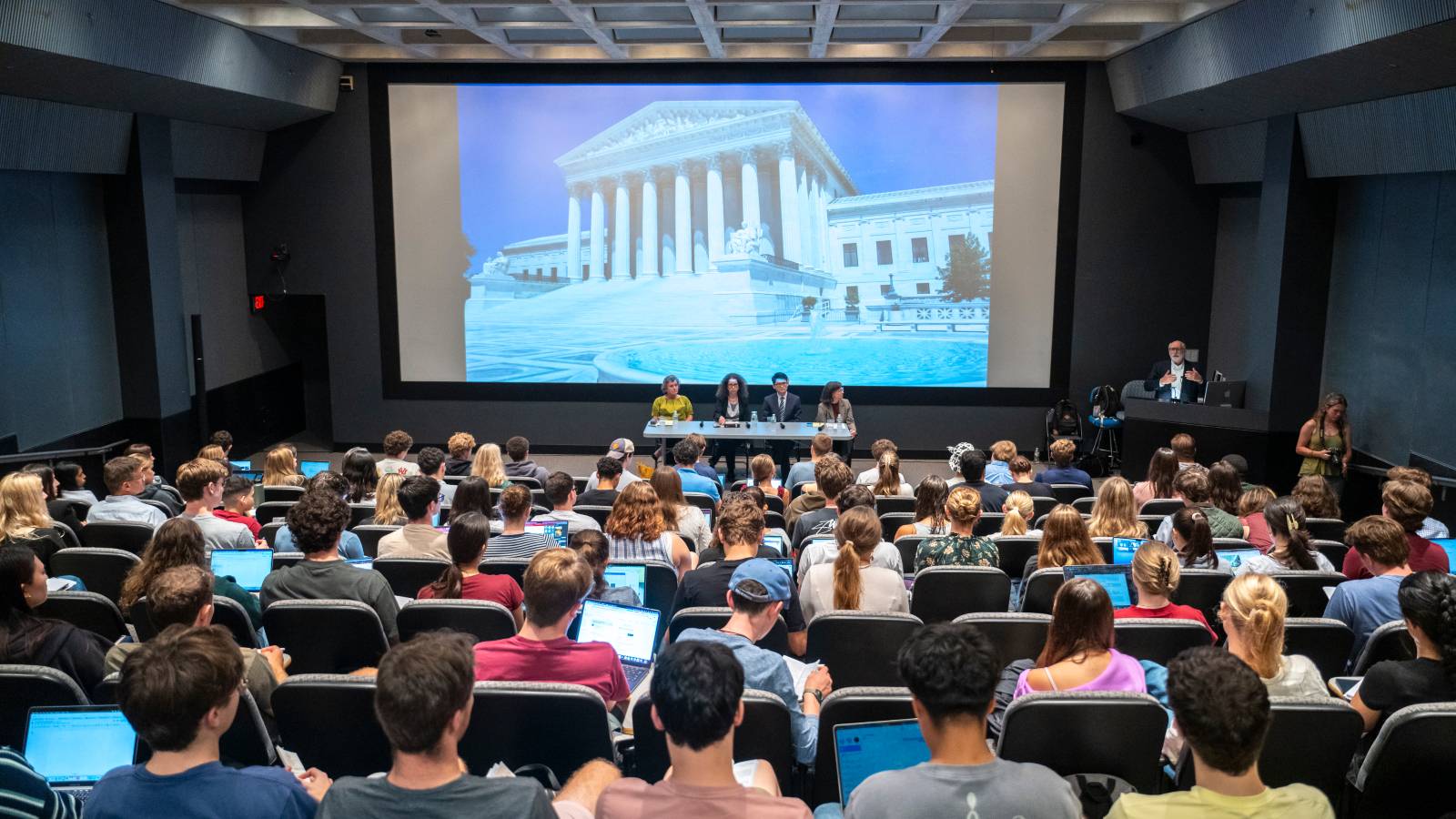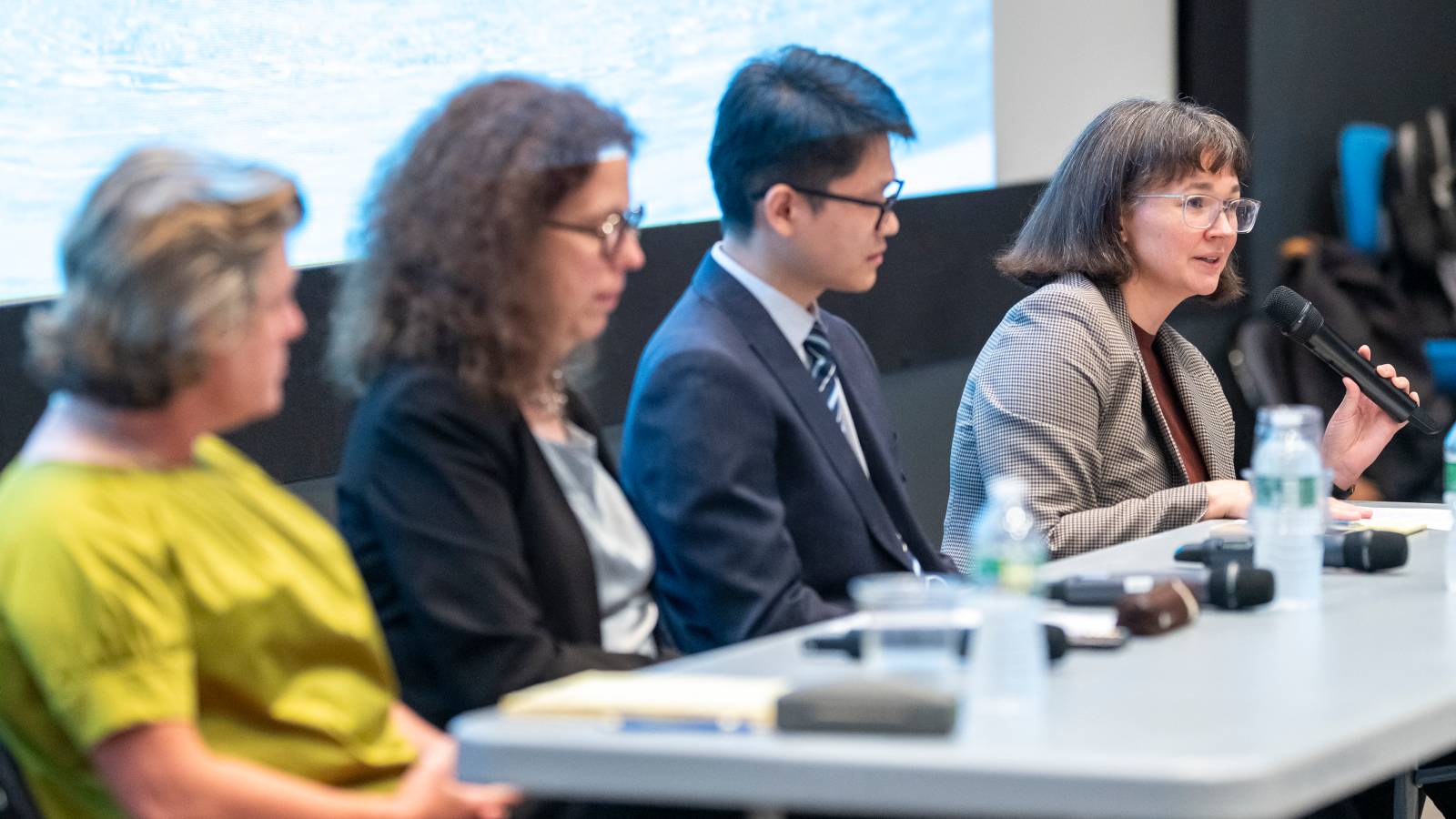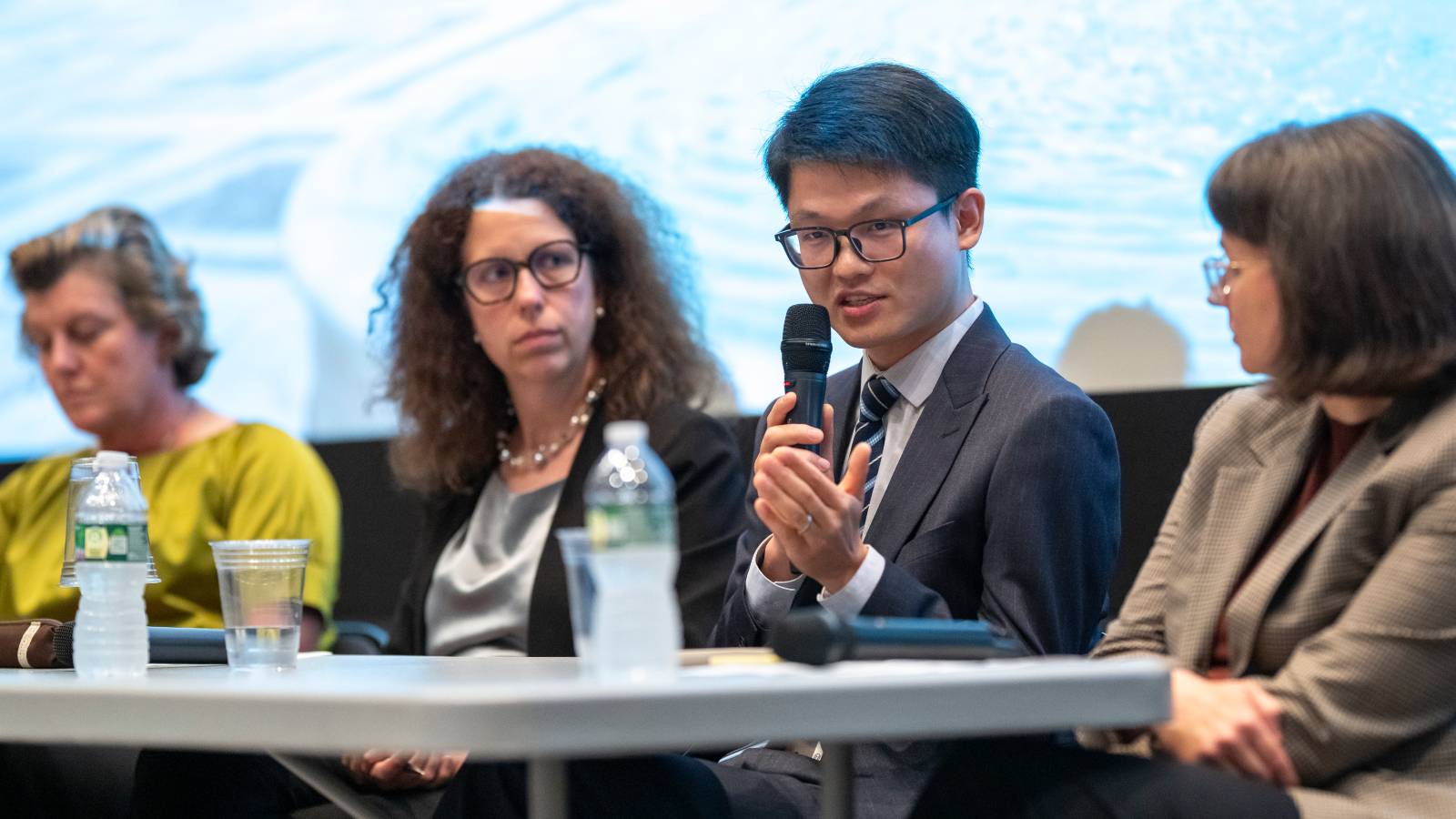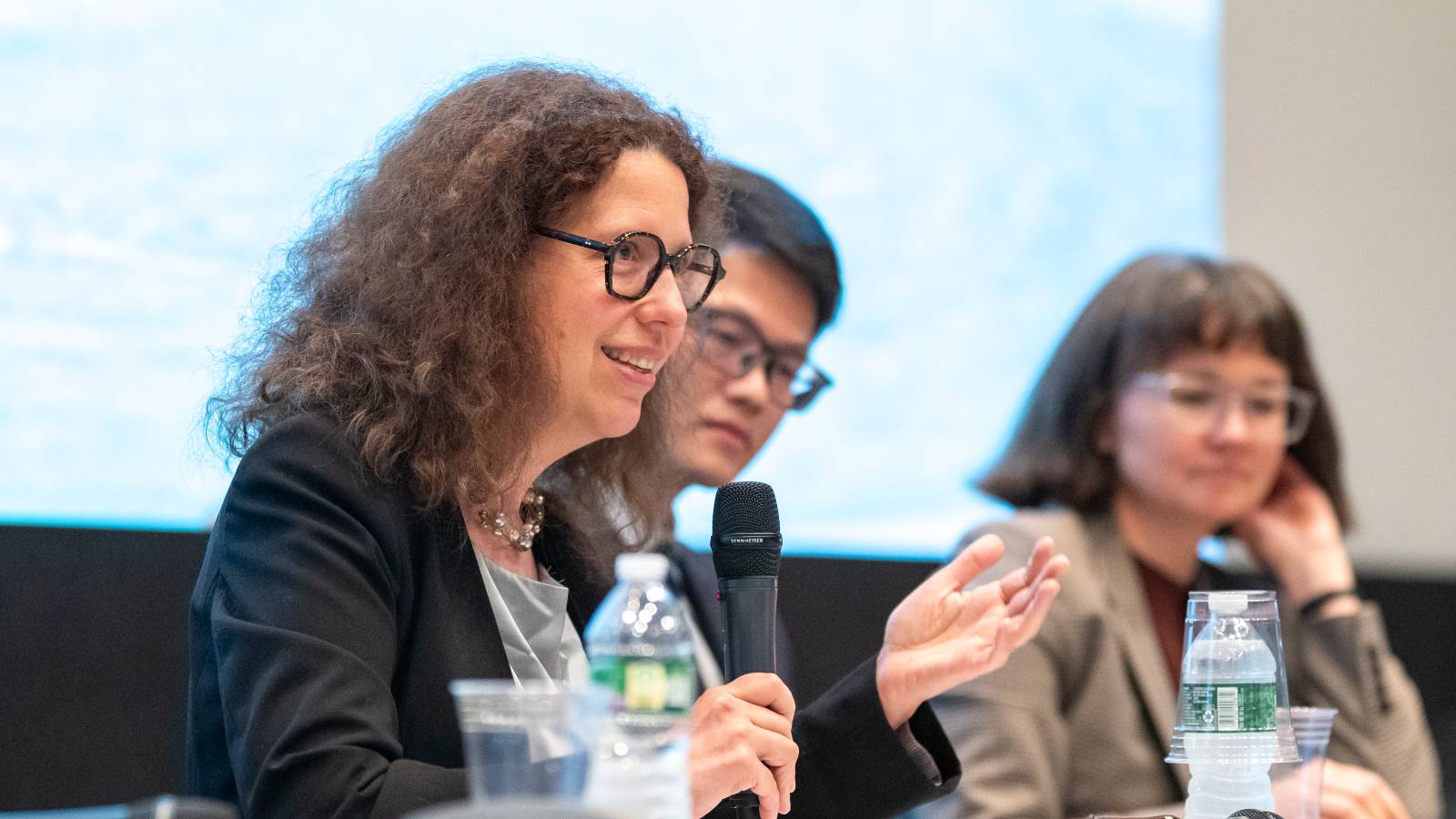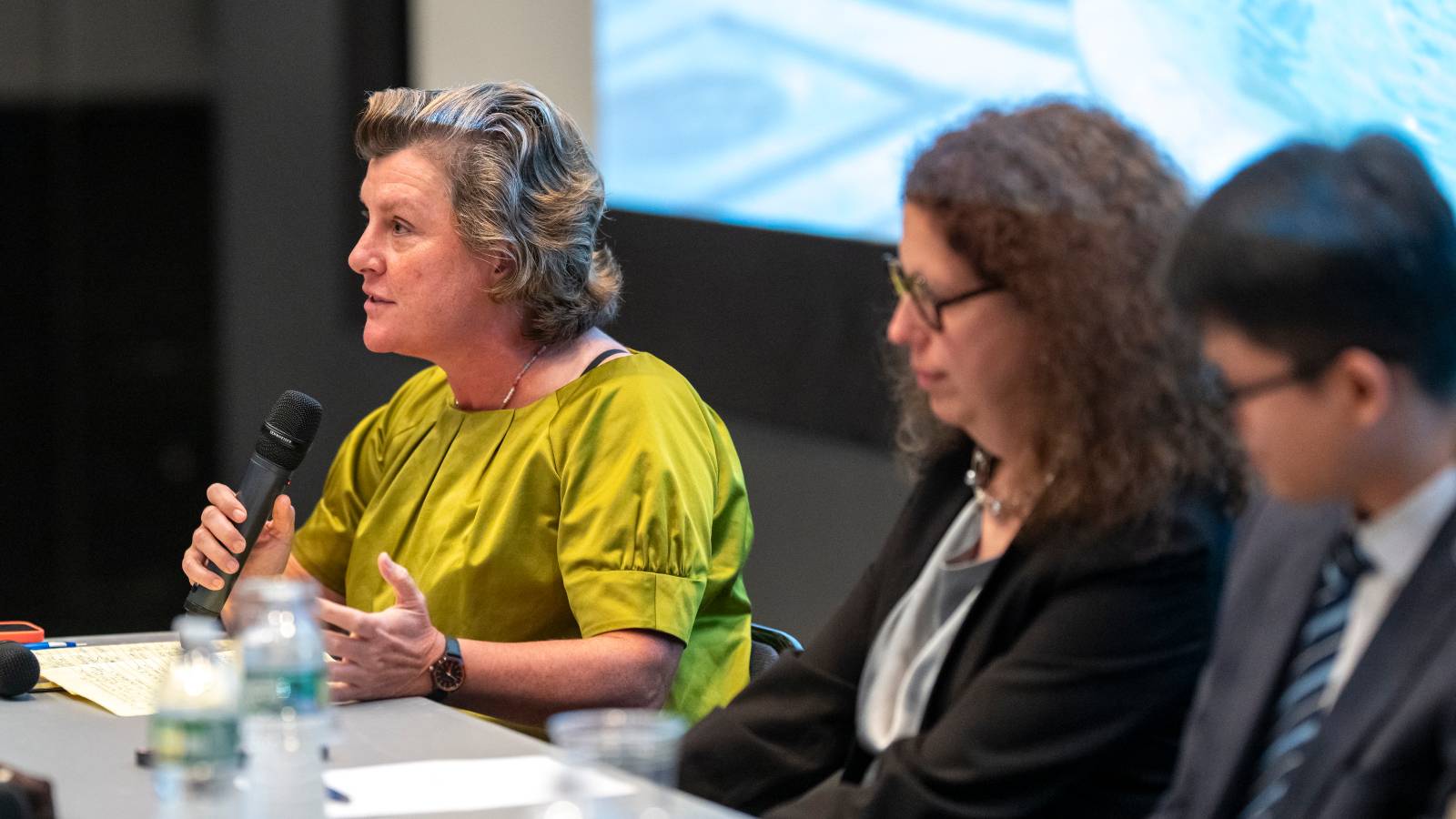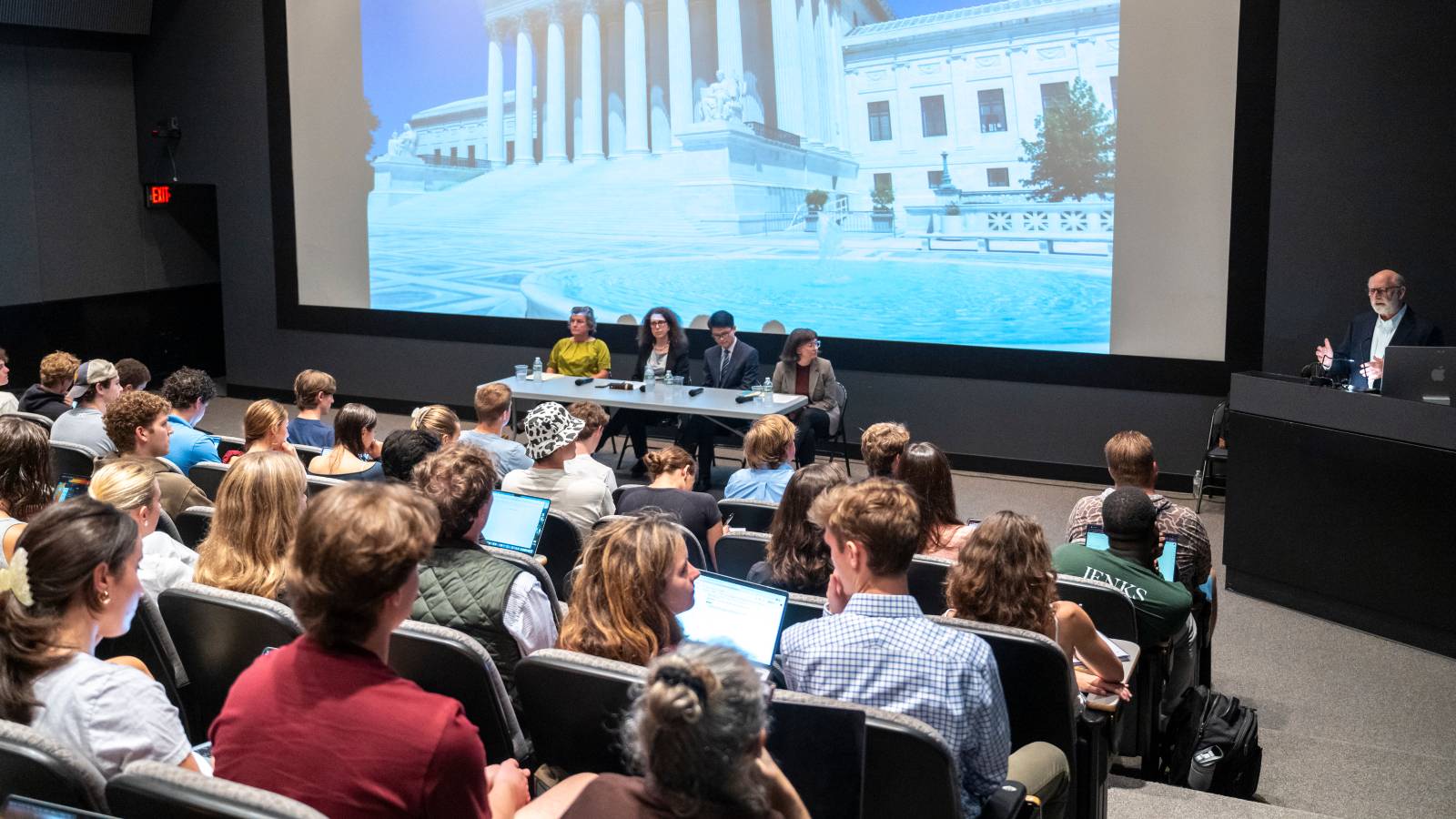
A panel of Colgate faculty members shared their perspectives on “American Constitutionalism at 250: The Roberts Court and the Evolution of a Unitary Executive” as part of the University’s celebration of Constitution Day Sept. 17.
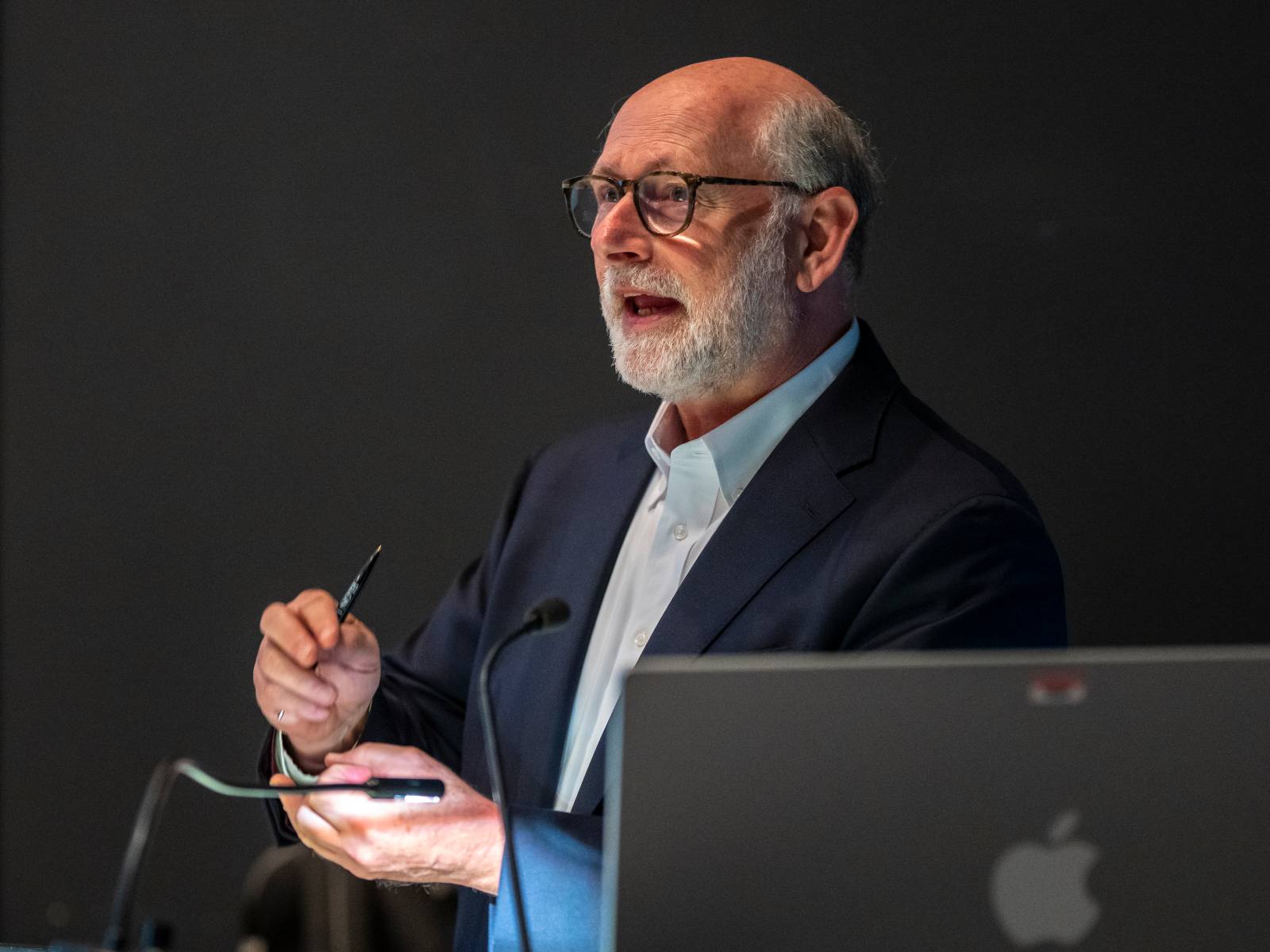
Colgate has hosted an annual event to honor Constitution Day since 2005, sponsored by the Kraynak Institute for the Study of Freedom and Western Traditions. Moderator and Visiting Professor of Political Science Luke Bierman opened the event by providing historical context around the signing of the Constitution and spoke about how the ambiguities around federalism, the separation of powers, and judicial review continue to spark debate over their interpretation.
Assistant Professor in Political Science Annie Benn, an expert on U.S. bureaucracy, outlined the different tools both the president and Congress use to try to influence bureaucratic decision making and how it has shifted over time. Benn urged the audience to pay attention to news related to the bureaucracy, as it is “a fruitful venue for understanding constitutional conflict because this is sort of the front lines of the separation of powers debate.”
Issues surrounding tariffs, executive power, and the U.S. economy were addressed by Assistant Professor of Economics Dong (Carl) Cheng, who spoke about who has the authority to impose tariffs, the role of Congress, and who bears responsibility for impacts such as higher prices and disrupted international economic relations. “I think the tariff question is not just an economic policy debate question, but it is also a test of the boundary of executive power and also constitutional accountability,” Cheng said.
Associate Professor of Political Science Valerie Morkevičius, who also serves as the director of the International Relations Program, discussed the “fuzzy” boundaries between presidential and congressional powers in relation to areas such as military promotions and foreign affairs, including the war with Iran. She said modern presidents have taken advantage of the “loophole” to use military force without a formal declaration of war, but Congress has pushed back, trying to reclaim its right to declare war in the 1973 War Powers Resolution. Congress has tried to “grapple back the powers that the President has borrowed from it, and that has not been entirely successful,” Morkevičius said.
Stephanie Miner, Charles Evans Hughes Visiting Chair of government and jurisprudence in the Department of Political Science and former mayor of Syracuse, shared her perspective on the challenges faced by state and local governments when dealing with frequent presidential executive orders — which she said is a departure from the previous sense of “political continuity” under past administrations. “Now with executive orders, that has just completely changed the way that local officials, and even state officials, have to think about funding,” Miner said.
Bierman reminded the audience several times during the event that the Constitution begins with “We the people.”
“We the people are the ones who ultimately have authority over how we govern ourselves,” Bierman said, noting that the midterm elections are coming up in November.
Colgate’s Constitution Day celebration provides an opportunity for students, faculty, and special guests to exchange and challenge perspectives. Debate and discourse are featured prominently throughout Colgate’s curriculum, and a commitment to freedom of expression is central to its academic mission, bringing diversity of thought and background across campus, in the classroom, and beyond.
“It is so heartening to see the auditorium overflowing with students and other guests listening and asking questions in celebration of the American republic on Constitution Day,” said Bierman. “Despite dour predictions about our country’s divisions, hope springs eternal with this enthusiastic demonstration of interest and participation.”