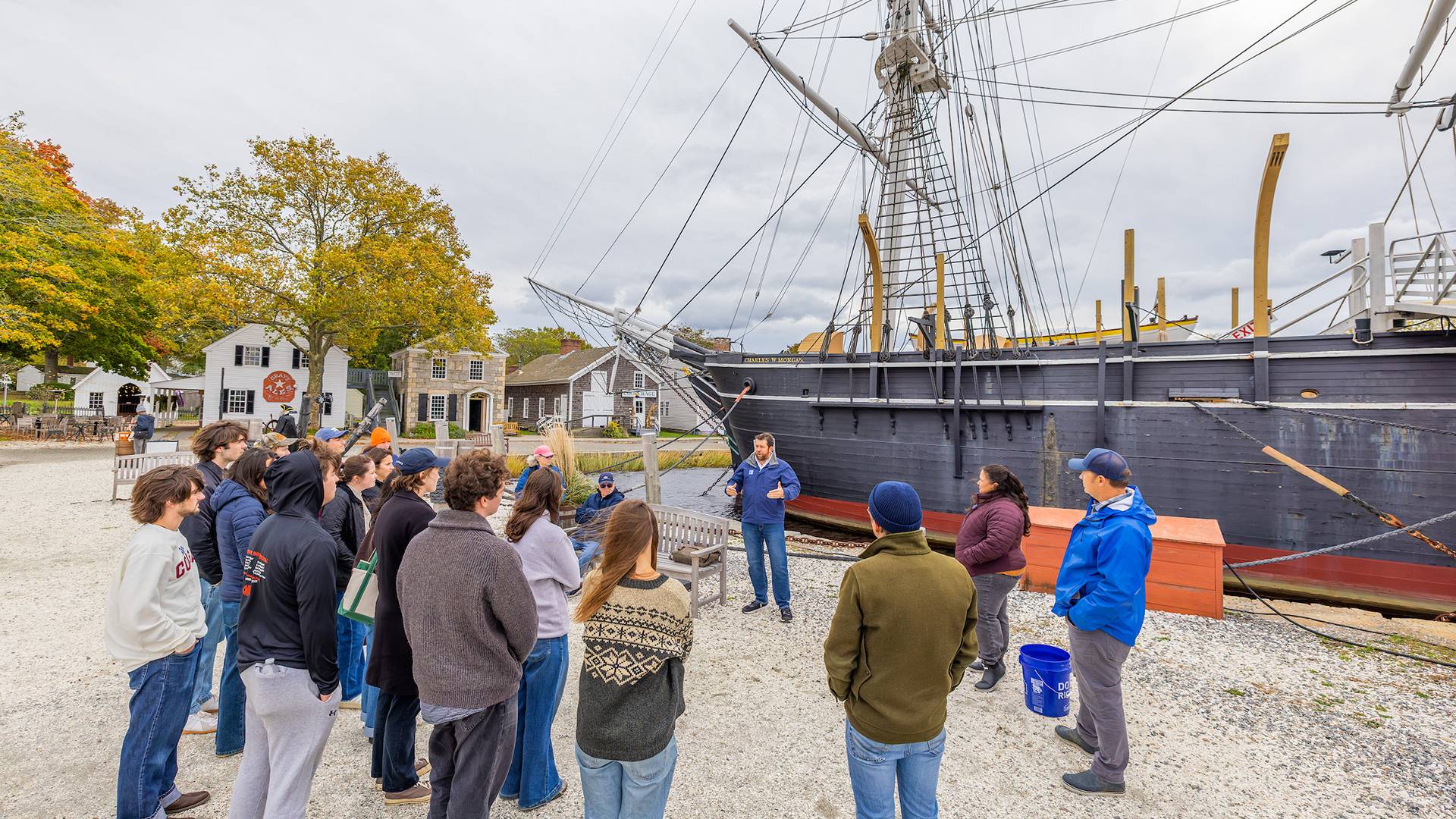
Although it’s impossible to teleport yourself into the pages of a great novel like Moby-Dick, you can get pretty close, students in Major American Novelists: Moby-Dick and Friends learned during a two-day excursion to New England on Oct. 17 and 18.
On a mission to shed light on Herman Melville’s inexhaustible novel, Associate Professor of English Ben Child orchestrated a Colgate-funded trip to visit sites related to the course’s principal text. Among them was the Mystic Seaport Museum in Mystic, Conn., the largest maritime museum in the U.S. and home to the Charles W. Morgan, the last whaling ship still floating today.
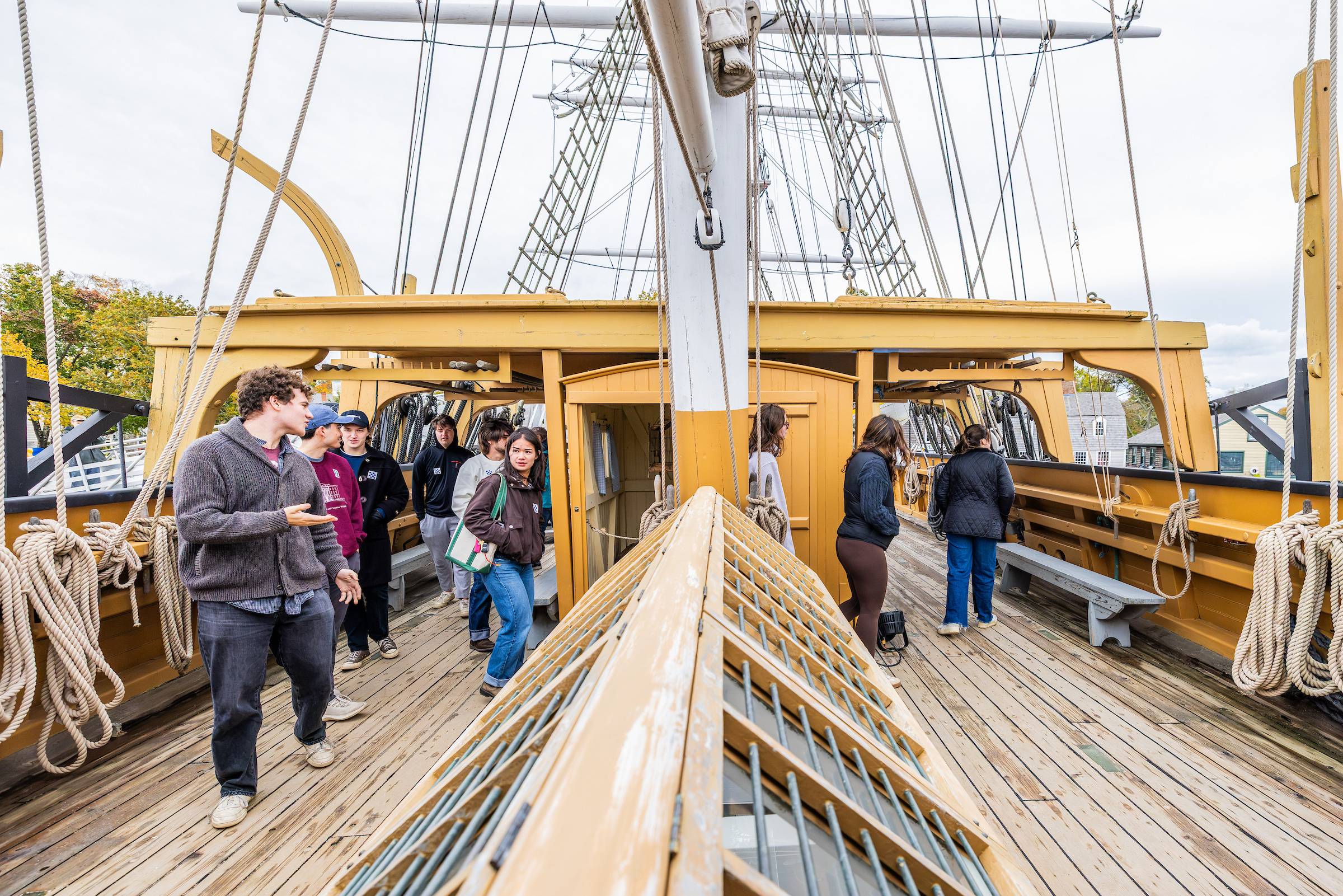
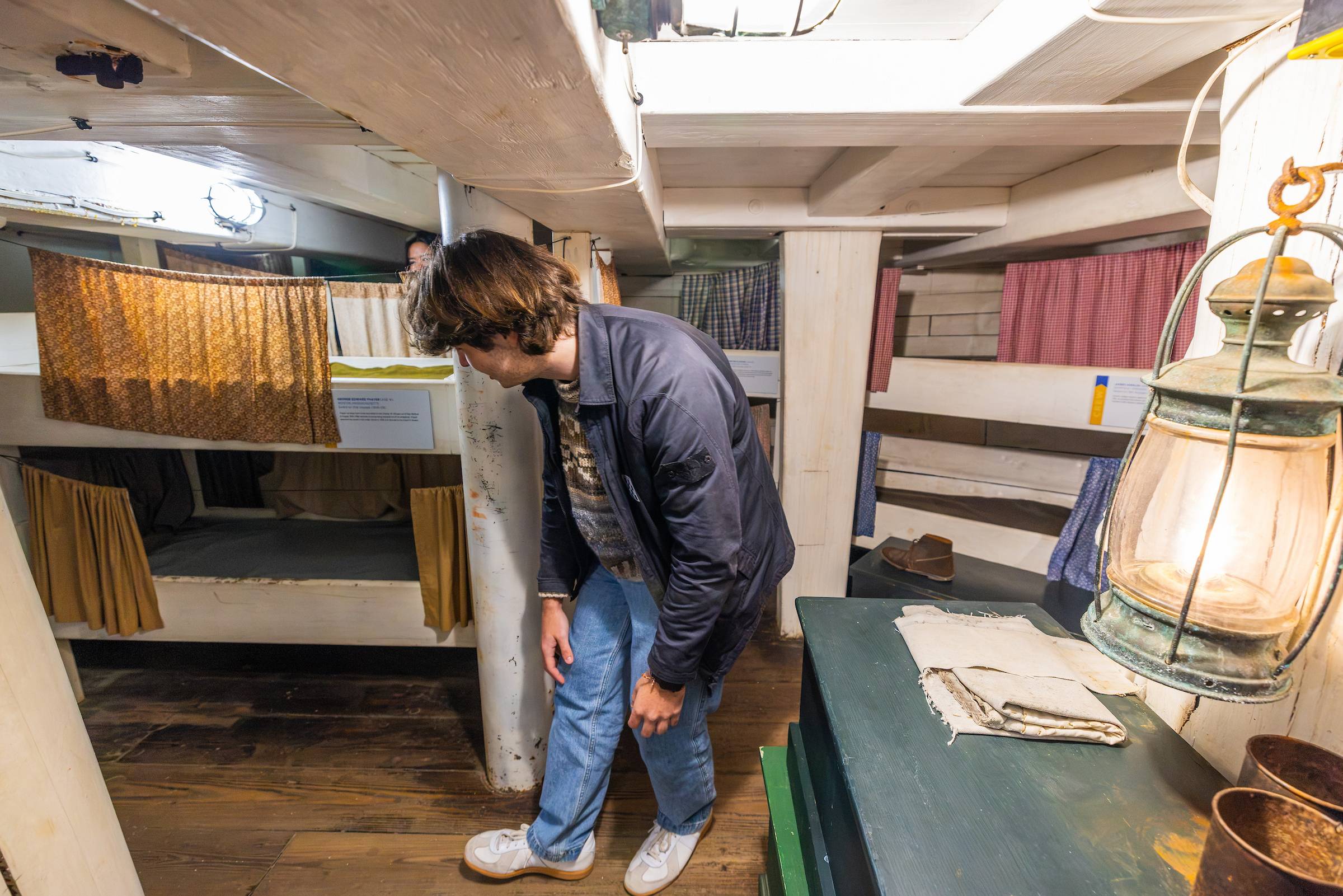
“There’s a casual density of detail that Melville has in Moby-Dick,” Child said. “The novel is full of the vocabulary of shipcraft and descriptions that can be tough to visualize. It’s up to you to construct that image, mentally, but that’s a hard thing to do when dealing with an obsolete technology. We had this rare chance to see something that’s as close to the Pequod as you’re ever going to get, and also to see where Melville’s account of things departs from material reality. It brings his world to light. That’s just not possible without being there.”
The class pairs Moby-Dick with Melville’s Typee and Billy Budd, as well as works by a range of other authors including Cormac McCarthy and Marilynne Robinson.
“My hope is that we’ve had deep enough encounters with it that we’ll be able to carry those insights beyond the class and continue to read the novel — even if we’re not reading the novel — in the world around us,” Child said.
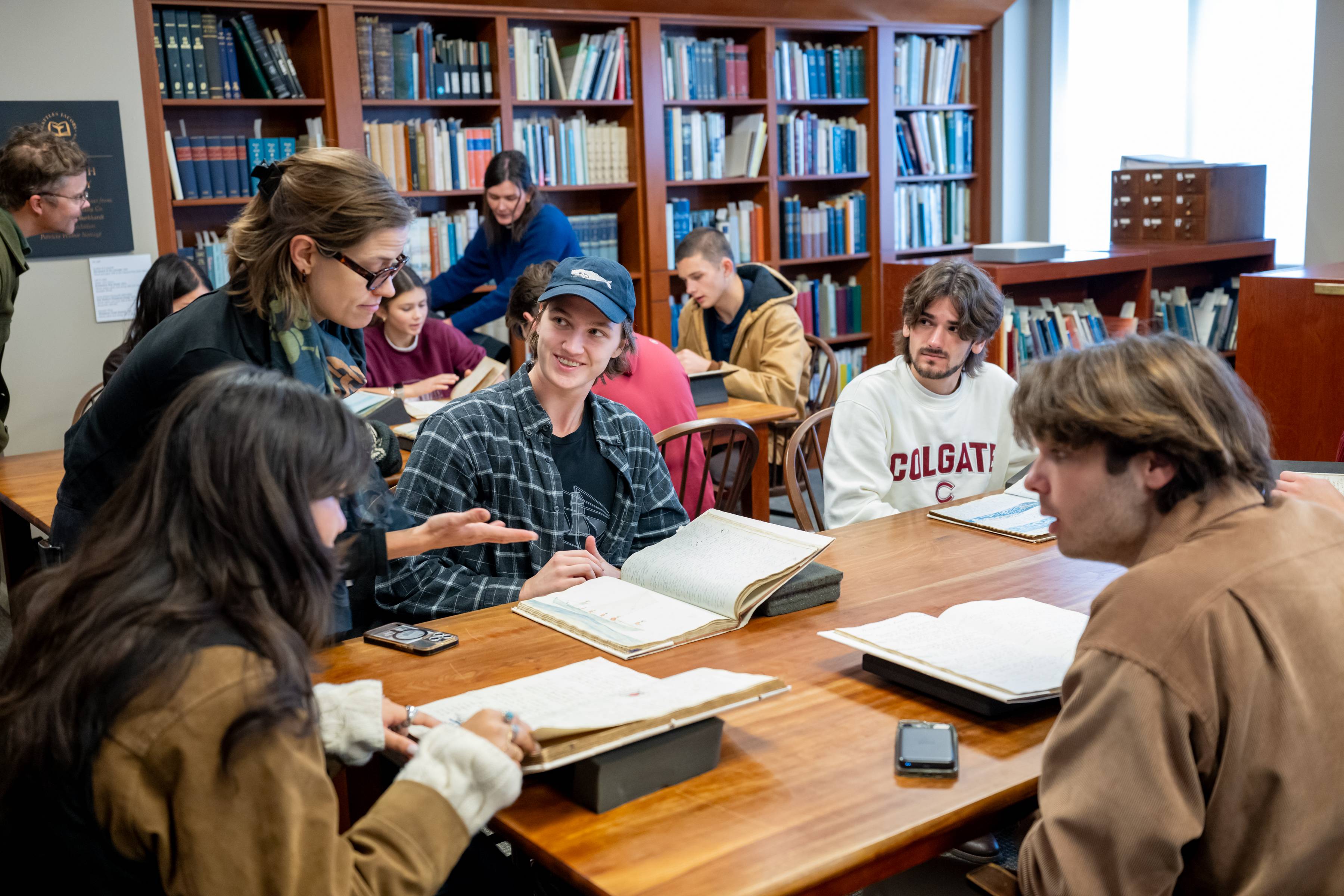
The group stopped first in Pittsfield, Mass., to see Arrowhead, the farmhouse where Melville lived from 1850 to 1863. There he wrote Moby-Dick and spent time with Nathaniel Hawthorne, one of his idols. Writer-in-residence Jana Laiz guided the class on a tour. Then, in Melville’s study, students took in the same view that inspired Melville while he wrote Moby-Dick: the whale-shaped ridge of Mount Greylock, the highest peak in Massachusetts.
The conversation with Laiz sparked an impromptu visit to the Berkshire Athenaeum, Pittsfield’s public library, with its own Herman Melville Memorial Room. Here, students saw the breadbox where Melville’s wife had stored his manuscript of Billy Budd, discovered by their granddaughter decades later. The publishing of this manuscript launched a nationwide revival and newfound appreciation for Melville’s literary achievements.
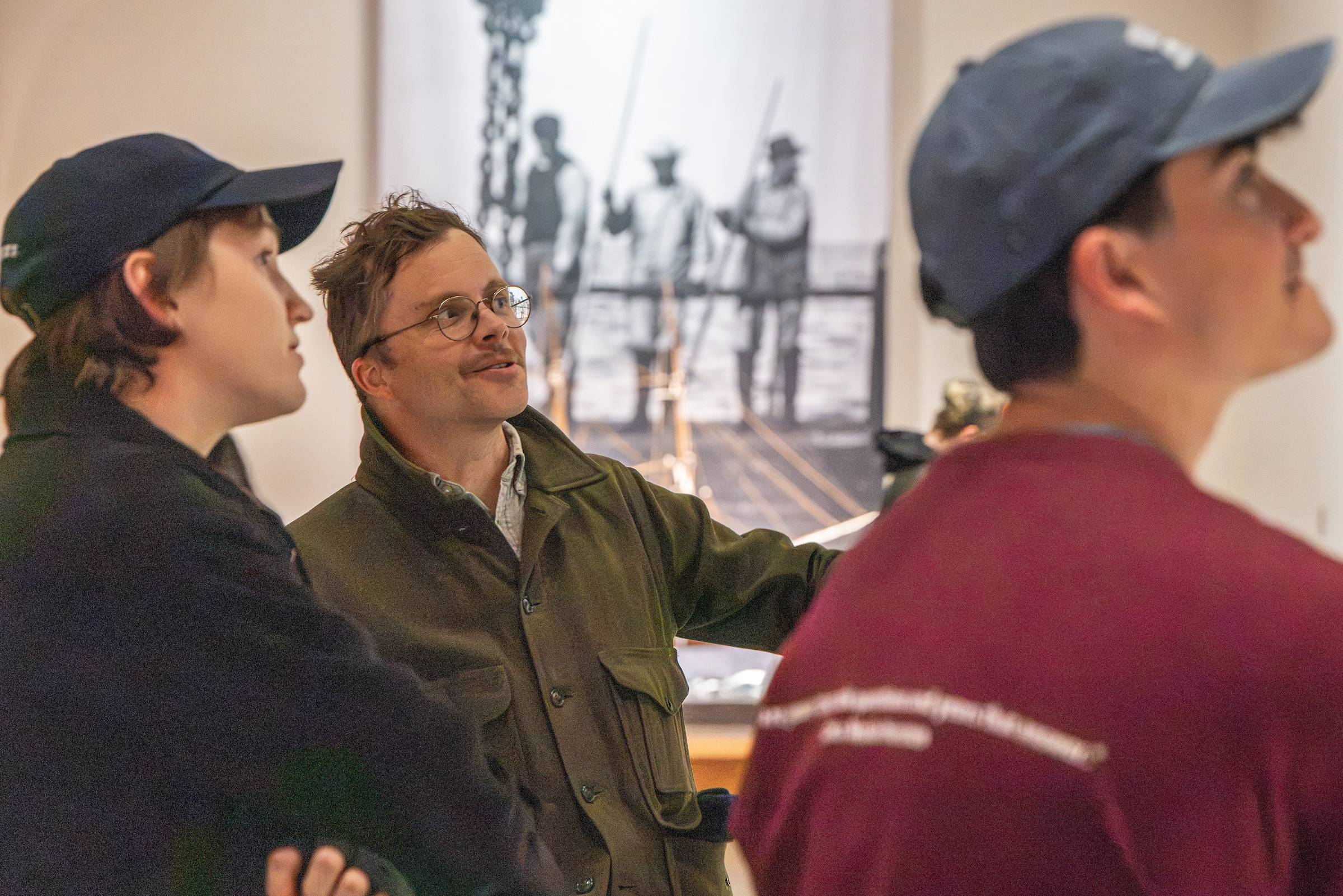
Afterward, the class made its way to Mystic Seaport. Students roamed above and below the deck of the Charles W. Morgan, envisioning the events of Moby-Dick unfolding around them. The group spent hours wandering the historic seaport village and exploring the museum’s extensive exhibits of whalecraft, from harpoons to blubber forks.
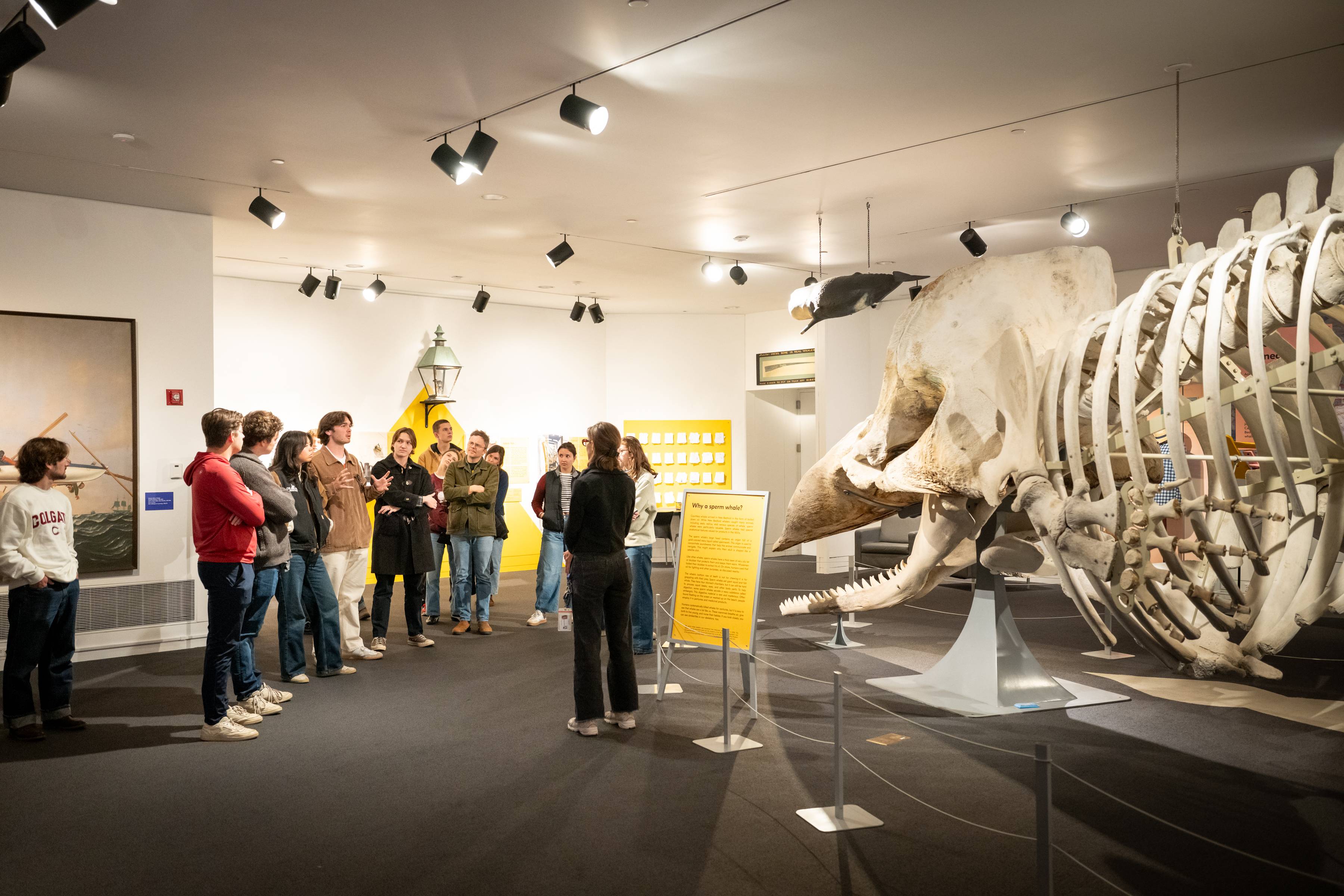
The next day, the group made its final stop at the New Bedford Whaling Museum in New Bedford, Mass., the same harbor where Melville set sail on the Acushnet at age 21 for his first whaling expedition. From there, the group walked around the corner to Seamen’s Bethel, the church that Melville visited just before he shipped out. Melville immortalized the church in Moby-Dick as the Whaleman’s Chapel, where Father Mapple delivers his famous sermon on Jonah and the whale.
Back in Hamilton, N.Y., Child hosted a dinner at his home for the students, joined by Colgate President Brian Casey, a devoted fan of Moby-Dick. He also moderated a Living Writers session on campus with authors Chris Bachelder and Jennifer Habel.