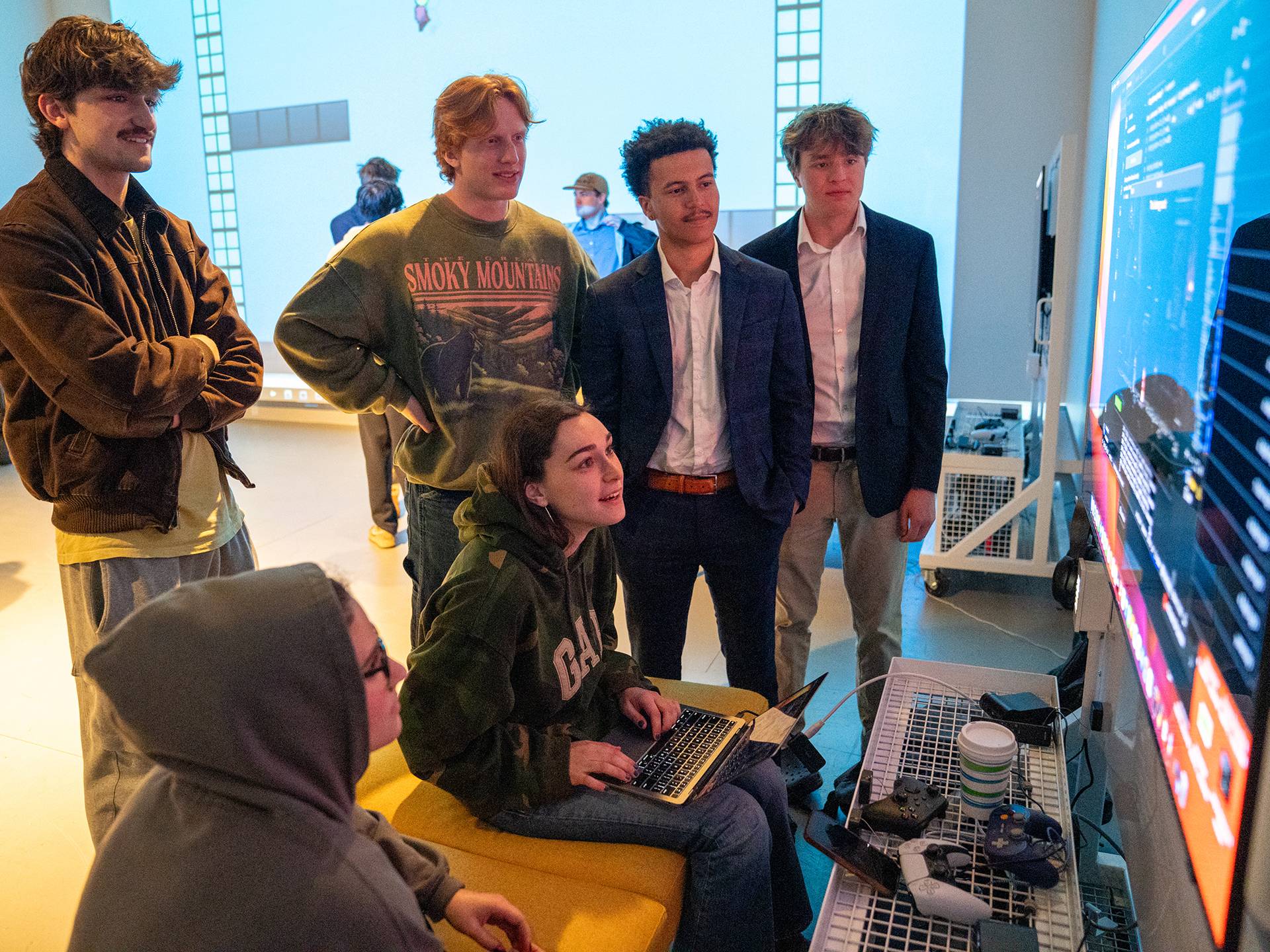
During the spring 2026 semester at Colgate, Associate Professor of Computer Science Elodie Fourquet piloted a new capstone class, COSC 481 Playful Thinking, Serious Coding, with a curriculum that combines programming expertise and narrative storytelling with each student’s unique interdisciplinary perspective.
The course’s design embodies Colgate’s commitment to a rigorous liberal arts education, as students build new skills while experimenting with the intersections of their interests. It was made possible in part by Fourquet’s two-year award during her tenure as Arnold A. Sio Chair in Diversity and Community, which supports diverse programming and creative initiatives across academic divisions.
Fourquet was inspired to create a game course by the Playful Thinking series, a gaming-centric collection of academic texts from MIT Press. Conversations with Assistant Professor Cassemere-Stanfield, who teaches FMST 214 Playful Polemics at Colgate in the Film and Media Studies Program, convinced Fourquet to design and teach a capstone course. The computer science capstone ultimately became a collaboration between professor and student, as Fourquet prioritized her students’ experiences and embraced their initiative. It took on a workshop format that encouraged communication and learning from one another, so that by the end of the course, students were able to bring their ideas to life using the technical skills they had honed throughout the semester.
For their final projects, students designed a 2D platform game based on an original concept for a narrative arc, represented through three levels of increasing gameplay difficulty. Many students drew inspiration from their other academic and extracurricular interests.
What I’m trying to do is show students, ‘You have the skill, especially with a liberal arts education, to create things that are unique.’
Associate Professor Elodie Fourquet
Grace Kenney ’26 created a fresh video game take on Homer’s The Odyssey. She called her game The Many-Adventured Man and modeled it after Odysseus’ battle with the cyclops Polyphemus. The game incorporates details from the story and frames them as puzzles that players must crack to advance.
“I thought that the way that Odysseus faced different challenges throughout his journey would translate well to different levels in a video game,” Kenney said. “To incorporate the story of Odysseus into a video game, I had to balance staying true to the story but also creating a compelling game that followed the constraints of the assignment.”
The course pushed students to design playable video games with the same professional quality as the games they admire outside of the classroom.
“Colgate students are very willing to be challenged,” Fourquet said. “What I’m trying to do is show students, ‘You have the skill, especially with a liberal arts education, to create things that are unique.’”
Each student’s project was distinct. Irae Jung ’27, who studies computer science and music, built a platform game inspired by song composition. Players must strike the correct note at the correct time in a measure in order to navigate the game space. Fausto De Leon ’27 found inspiration in Colgate’s Robert M. Linsley Geology Museum. His game, Shifting Sands, requires players to recover precious gems from sandy terrain to be returned to the museum.
Liam Davis ’27 and Vincent Ryan ’27, teammates on the men’s track team, worked together to promote clean competition through their game, Complete Clean, in which the player dodges performance-enhancing drugs and collects blood samples for drug testing.
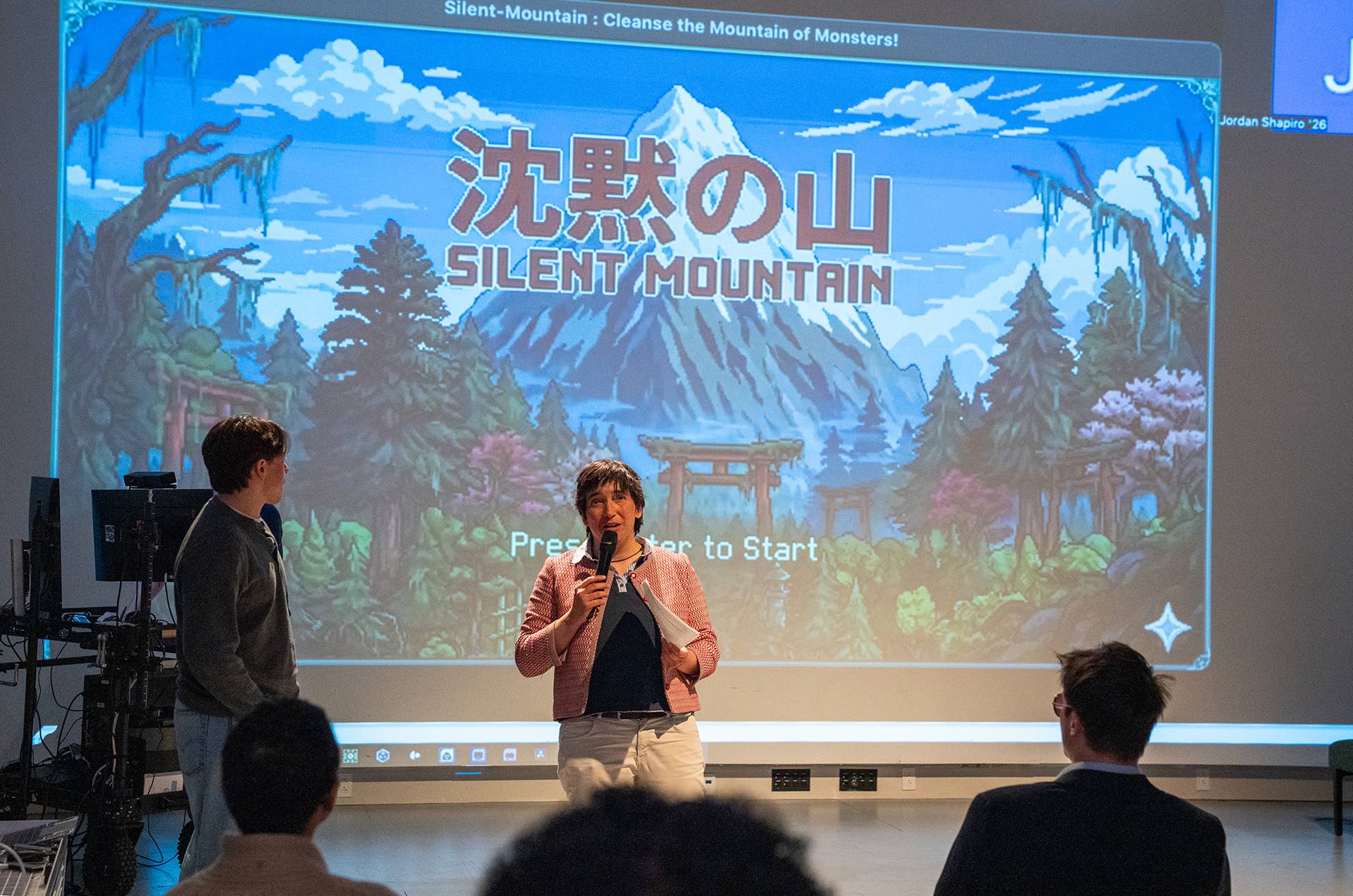
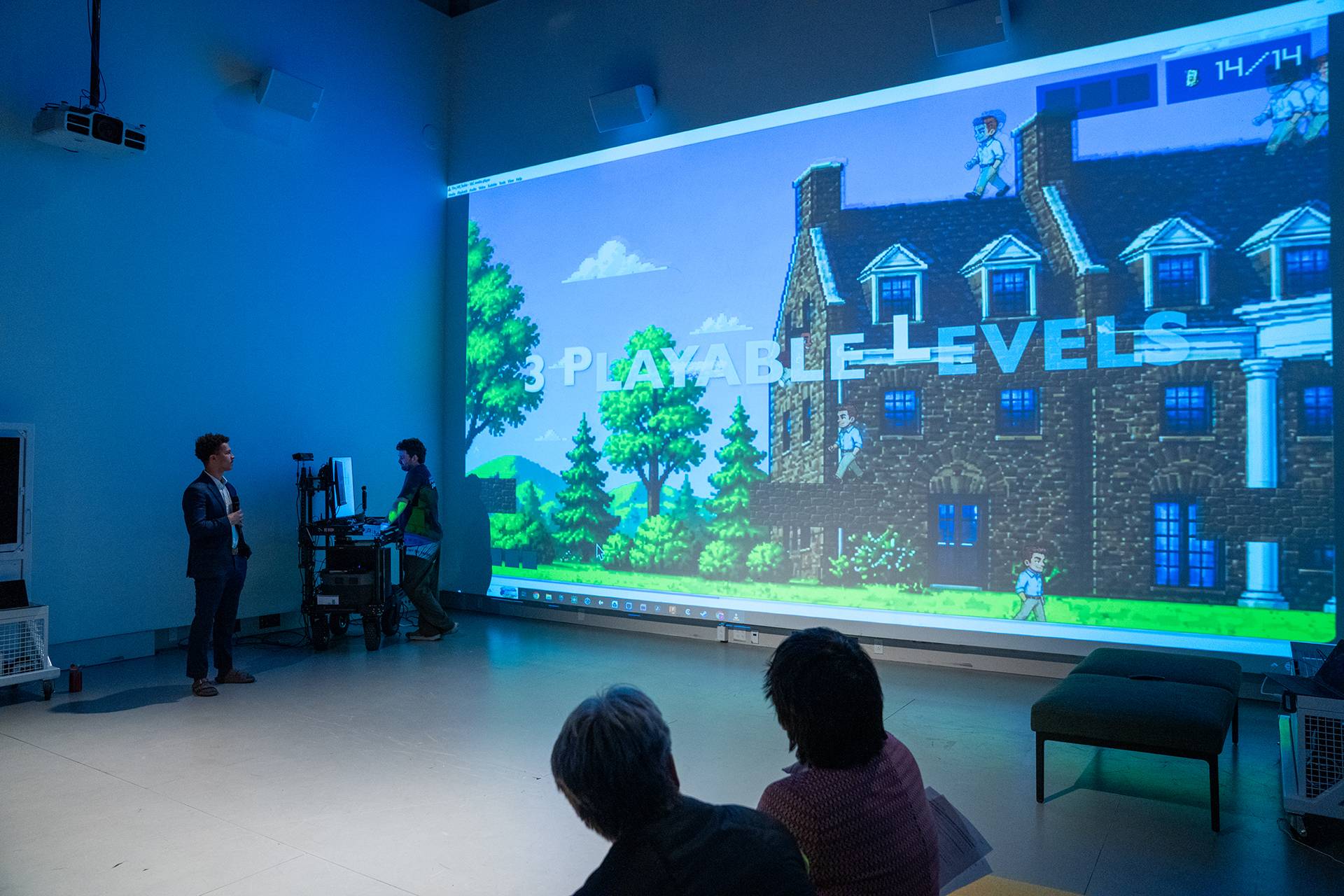
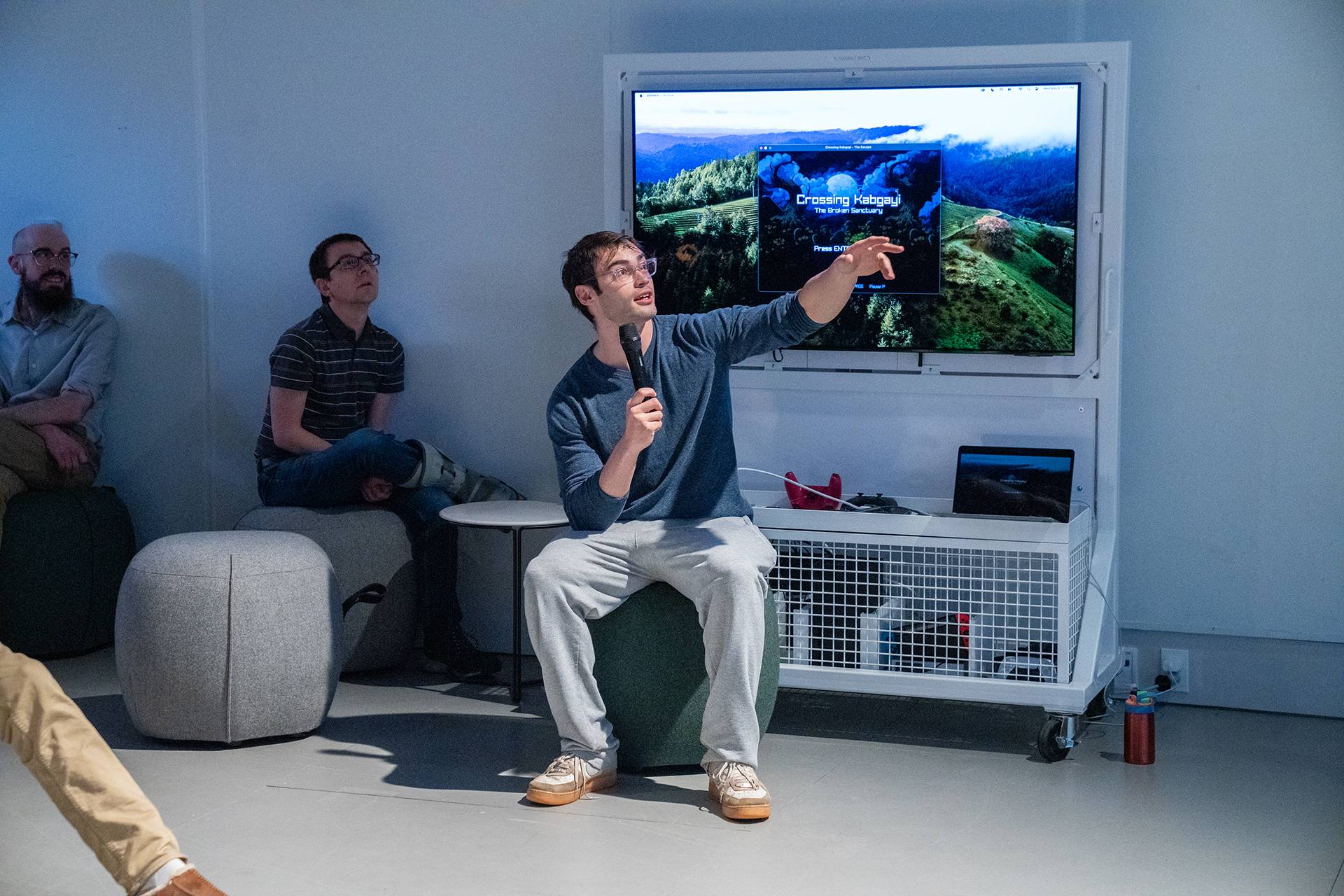
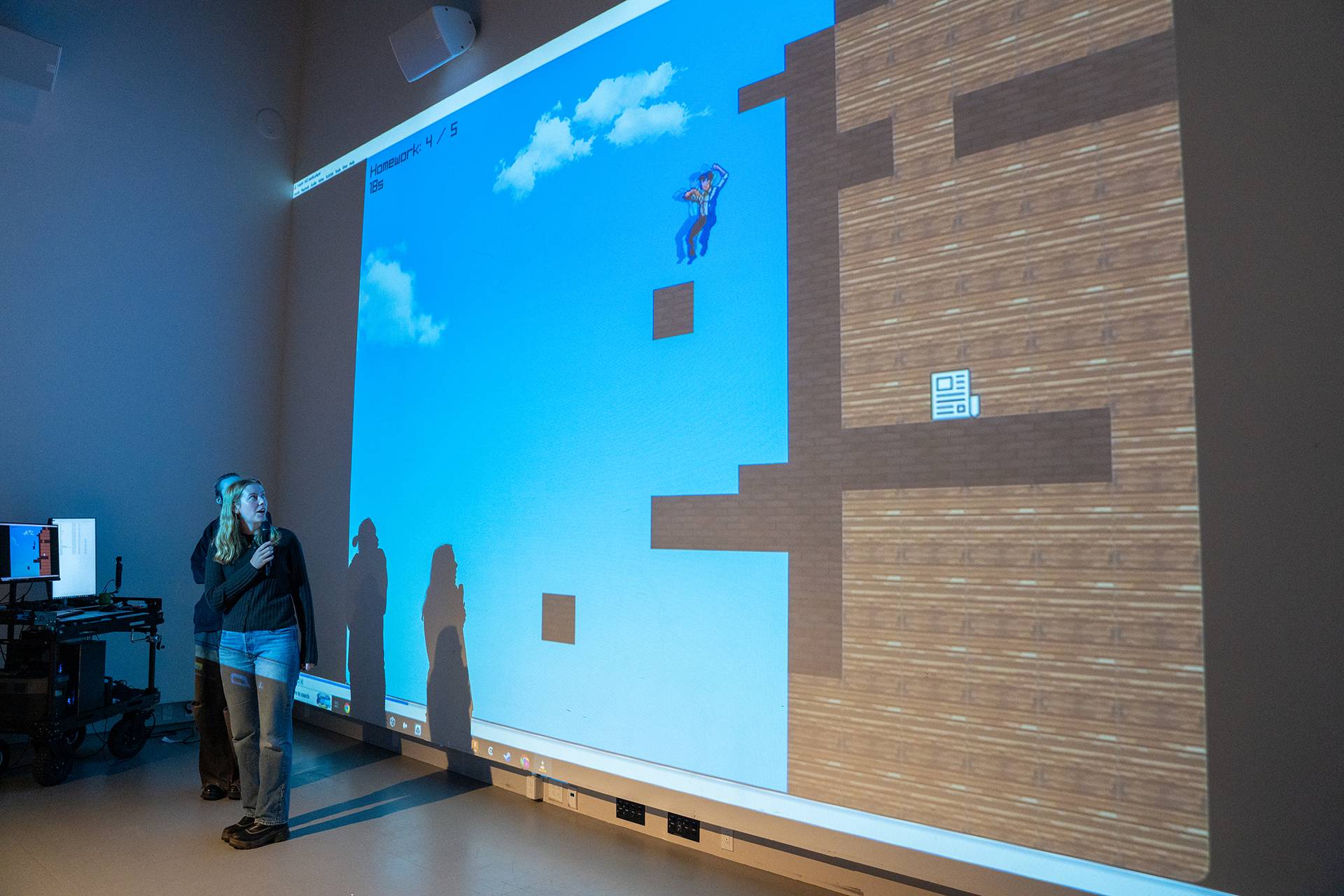
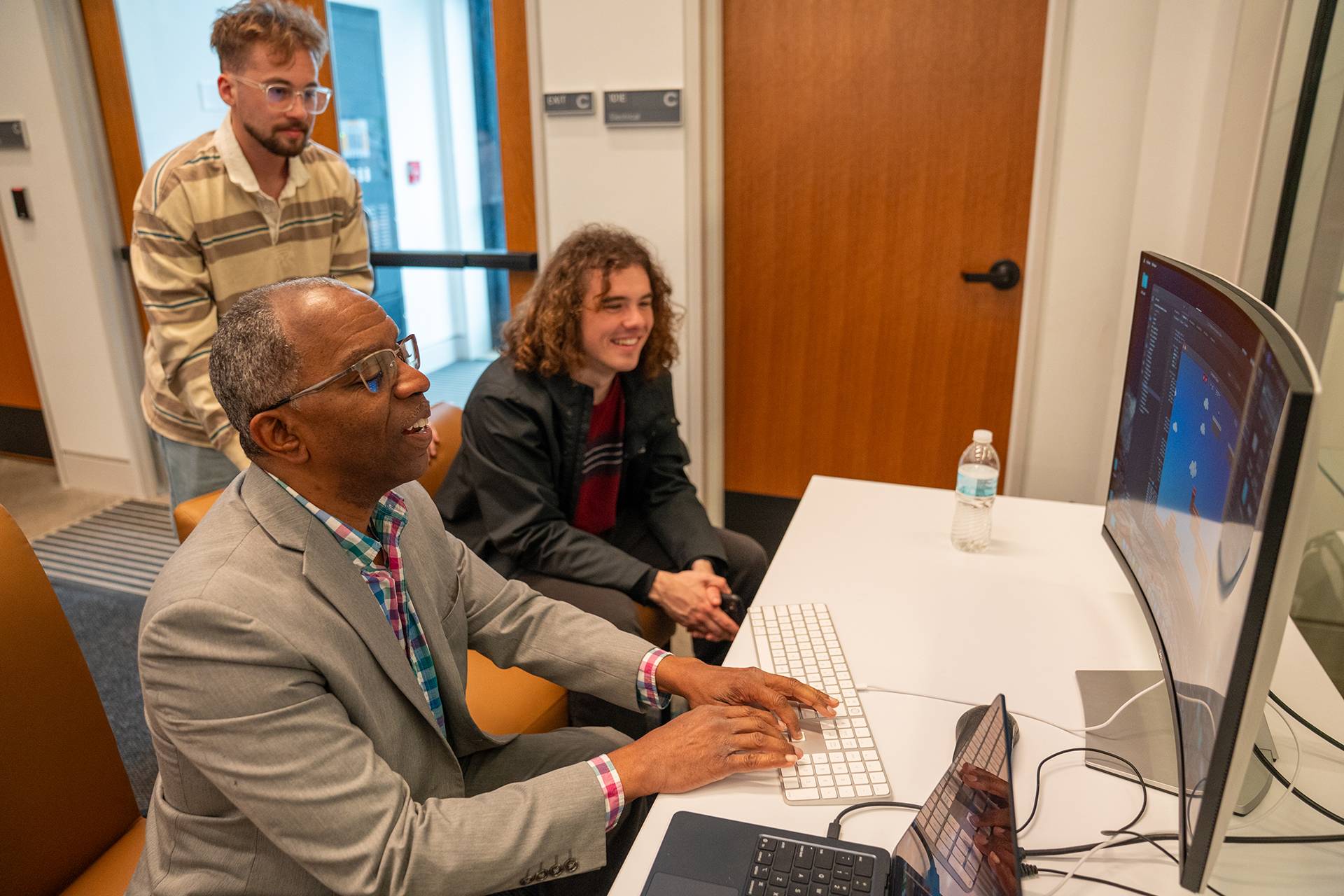
“This was the first CS class I have had at Colgate that allowed you to come up with your own idea for what your final game project would look like. Professor Fourquet was very open to any theme or general topic you were interested in. In addition to the added creativity, it was the first time I made a game completely end-to-end with no outside aid,” Davis said.
To prepare to tackle this ambitious task, students completed a mid-semester project and designed a creative reimagining of another classic game, either Snake or Pang. This assignment served to demystify the logic of game-building in manageable steps while still encouraging creativity and innovation.
The course culminated in projects that students can now share in their portfolios. It created space for experimentation, contributed to professional growth, and developed programming skills.
“I liked that this class included code reviews, where we presented our progress to the class and took feedback and questions. This is something I often had to do during internships and now at my job, so it was good to see a class teach this skill,” Kenney said.
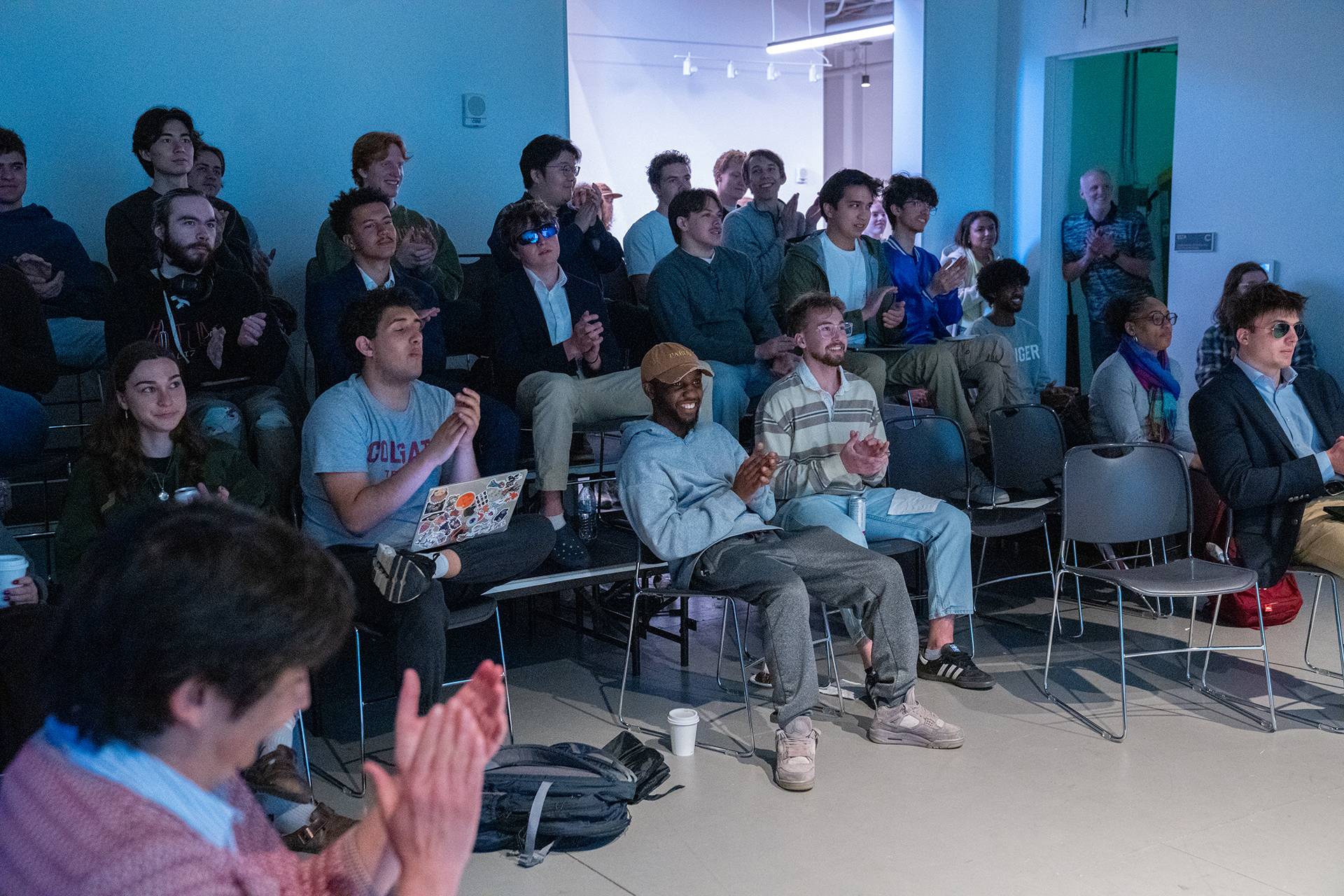
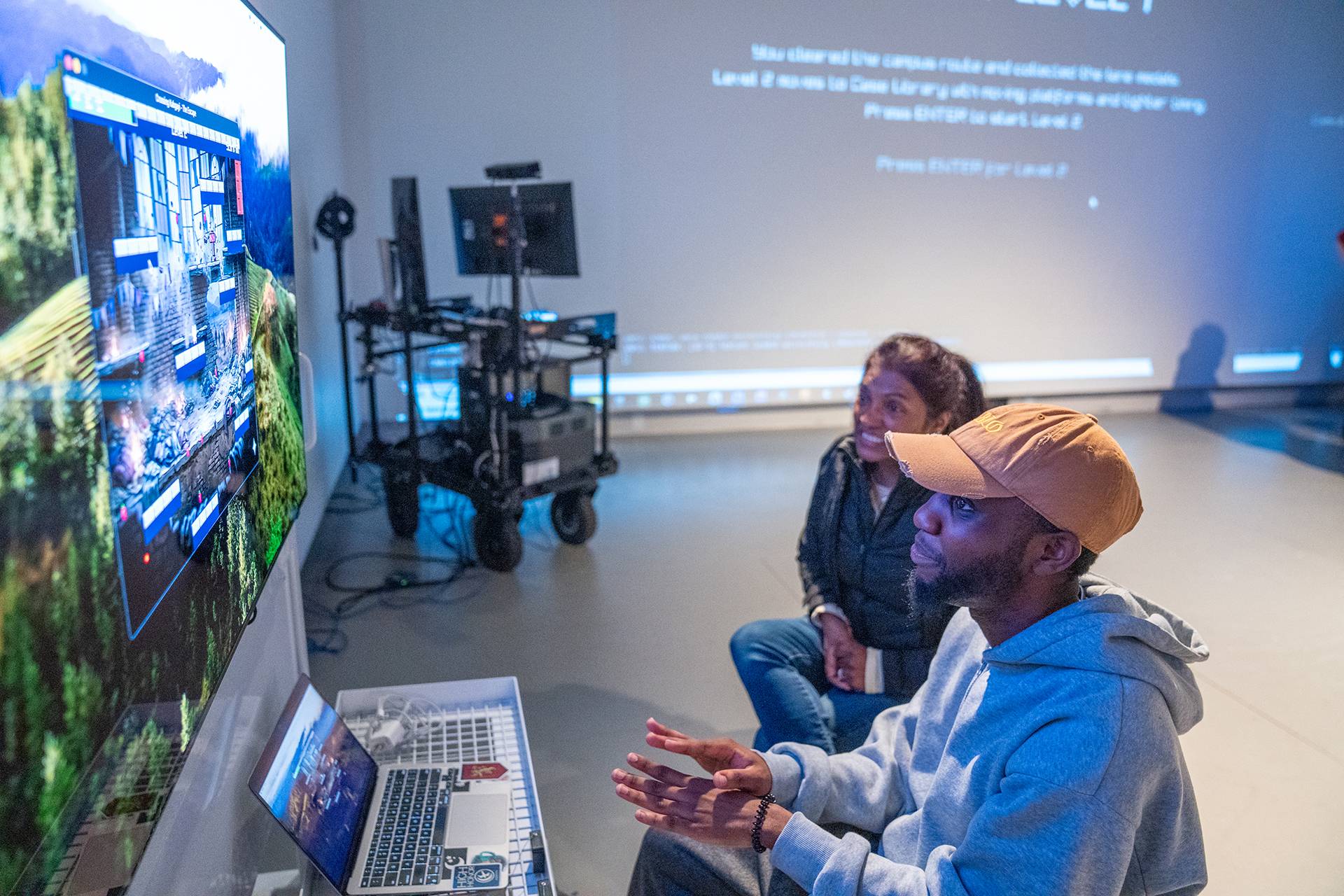
Students participated in a public showing and feedback session in Bernstein Hall, organized by Assistant Professor of Film and Media Studies Ashleigh Cassemere-Stanfield, with industry professionals, Xalavier Nelson Jr., founder of Strange Scaffold, and Ashlyn Sparrow, an analog and digital game designer — both of whom continue their engagement with Colgate students.
“Participating in the public showing and feedback session was awesome,” De Leon said. “I learned a lot by watching people who had never tried my game play it for the first time. When I was making my game, I would have never thought it would get in the hands of some actual game developers, so letting them analyze my game and really dig into the specific choices that I made was really cool. The conversation felt really productive, and it made me excited to perhaps continue creating games in the future.”
Looking ahead, the Department of Computer Science plans to implement and enhance this novel curriculum in different iterations, including the fall 2026 section of COSC 101, and explore additional avenues of cross-disciplinary collaboration with the Film and Media Studies Program.