Animals are in constant communication with each other. Prairie dogs have distinct warning calls for various threats, elephants make sounds of different frequencies when communicating with specific family members, and ants leave certain pheromone trails based on the quality of food source they discovered.
However, there is one element that is affecting the conversation: the machines that are disrupting the animals’ habitats. Losses from wildlife can cost up to $150 billion globally. Between 3,000–5,000 collisions between wildlife and trains — mostly involving moose and roe deer — occur annually across the Swedish railway network. In the U.S., a deer is struck by a car every 20 seconds — and traditional deterrents like fences, pyrotechnics, or static scare devices don’t work because animals eventually get used to them.
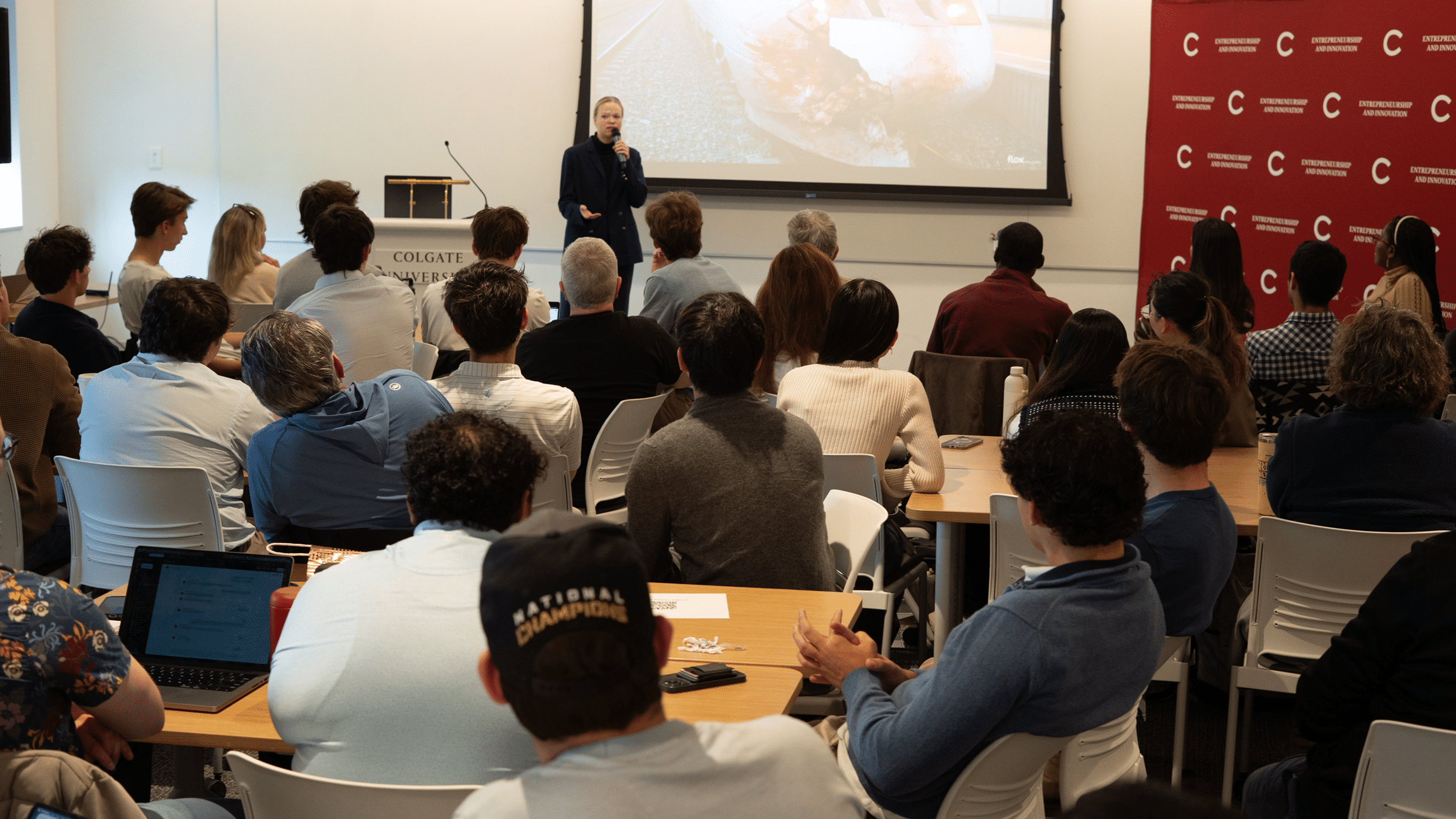
“All the technology today is built for very structured environments. But when we come to nature, it’s dynamic, complex, and alive. You need to understand how animals are moving, where the corridors are, and where endangered species live. What we are doing is enabling machines to interact with nature in a completely different way,” said Sára Nožková during the TIA Incubator kickoff weekend.
Nožková shared that background during an engaging keynote on how her team is using AI programming to facilitate necessary conversations between wildlife and traffic. Nožková founded Flox Intelligence, a company dedicated to creating a world where animals and humans can coexist in shared landscapes. Flox Intelligence technology detects wildlife movement, identifies the species, and puts out a warning signal that communicates potential threats. Her team is composed of 20 people with diverse expertise ranging from AI engineers, to environmental engineers, to wildlife biologists.
“When I started back in 2020, almost no one believed it. Everyone thought we were crazy. How can you decode what animals are saying? It seemed very hard to accomplish, so we relied on grants and early paying customers to validate it from day one. To raise my first seed round, it took four years,” the Flox Intelligence engineer recalled. She stressed to TIA’s students that they should be confident in their idea, and be willing to persevere even if others don’t share that confidence.
Nožková’s path to innovation began when she started to notice more and more motor vehicle-animal collisions, despite intervention methods such as highway fences and manual security being put into action. Wildlife can jump over fences and sneak past guards. She realized that animals are intelligent creatures, and it was about time technology started treating them as such — but this was easier said than done. Her machine had to decode species, motion, gender, proximity, and behavior within seconds. It had to change the way we interact with the animals we inhabit the land of. It had to be revolutionary.
“It’s hard to find someone who is really as passionate about the mission as you are and will give their 100 percent. You can train people for technical skills, but the mindset is the biggest part — I always look for people who stay hungry, stay humble, and take initiative,” noted Nožková.
The entrepreneur has received significant recognition for her innovative solution to wildlife traffic collisions, including being named in 2025: Sweden’s Female Founder of the Year, His Majesty (H.M.) The King’s Young Pioneer Award, and an InfraAwards recipient. She also received the prestigious Deloitte Global Impact Award, and took the top prize of $1M as the Genius NY winner in 2026.
Due to the market in the United States, Nožková is now based in Upstate New York where Flox Intelligence has curated partnerships with Hancock International Airport, Cornell University, and National Grid.
By empowering machines to speak the language of nature, Flox Intelligence continues to pioneer intelligent solutions that bridge the gap between human infrastructure and wildlife to build a safer, more inclusive world for all.