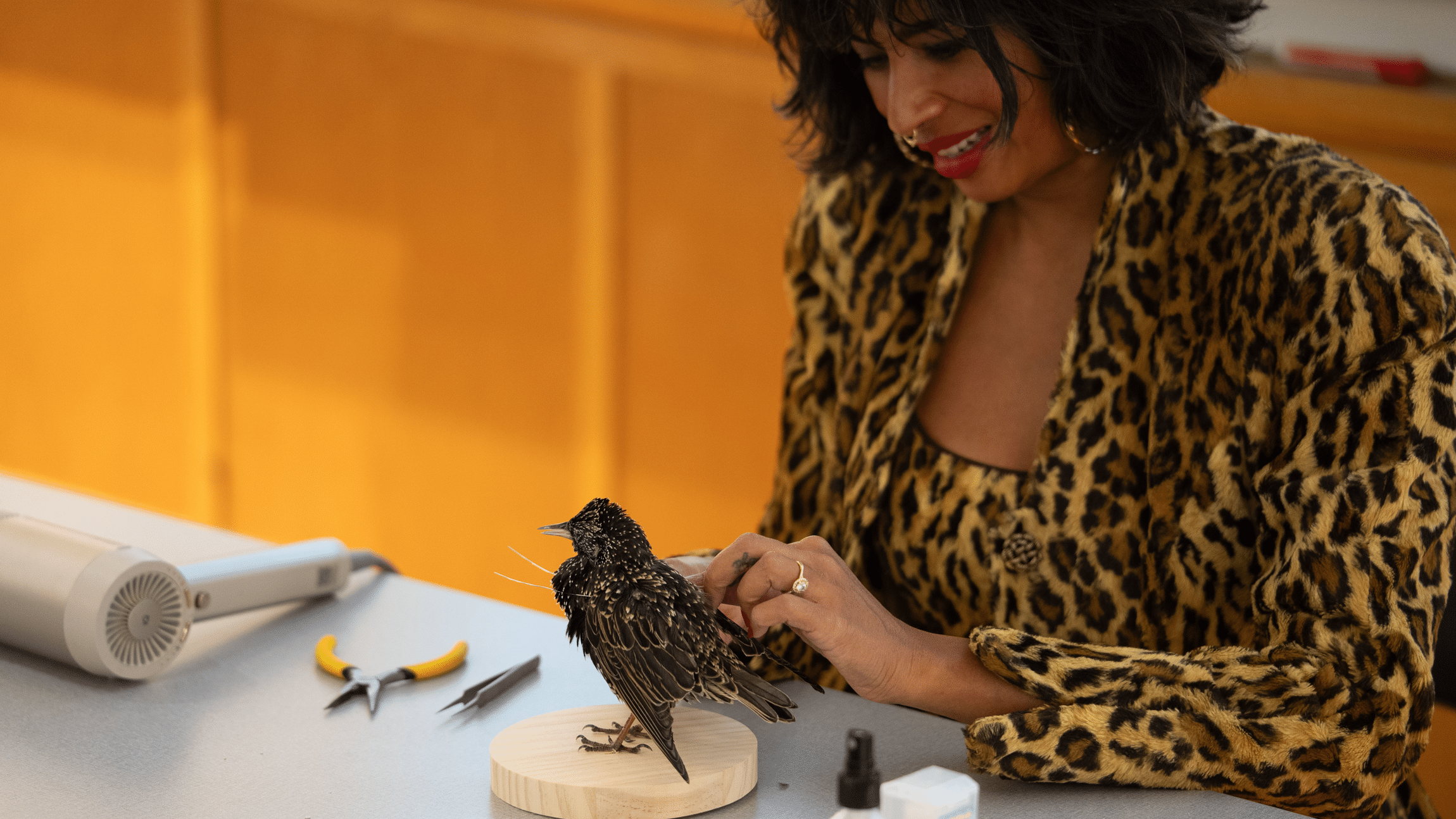
While art traditionally seeks to capture the motion, color, and vividness of the living world, Divya Anantharaman finds her canvas in what remains. As the founder of Gotham Taxidermy, she exceeds the boundaries of death to create a work of beauty, education, and appreciation for nature. The award-winning taxidermist visited Colgate for an E&I co-sponsored weekend, Sept. 25–27, of birds, butterflies, and stuffed animals.
On Friday, Anantharaman gave an engaging seminar and demonstration of taxidermy, detailing the tedious work that goes into preserving nature. She started her talk by discussing how she got into the art of taxidermy. Growing up in a city with little access to nature, Anantharaman was introduced to wildlife through stuffed animals in natural history museums. Despite being fascinated by taxidermied animals, she was put off from the industry when she learned just how gruesome is the task.
“My mom had this passion of teaching biology and science, and just ignited curiosity in kids. And the way she did that, was, of course, through lots of lessons in the classroom, but it was your preserved specimen, because that was a way that you can connect to an animal, without the barrier of needing binoculars, macro-lens camera, or any fancy equipment. She brought those to the kids, and she showed these cats, and we had this intentional, purposeful way of preserving the animal, honoring it. But I saw so much tenderness in this,” Anantharaman explained regarding her love for taxidermy.
Anantharaman took her affinity for art and pivoted towards fashion design. After a few years in the corporate fashion industry, the nature preservationist was continuously finding herself drawn to taxidermy. She left her job to take on a role as the resident taxidermist at the Morbid Anatomy Museum, and it was at this point where Anantharaman realized she couldn’t see herself doing anything else with her life. From here, she started her own business and became New York City’s premiere taxidermist, specializing in birds and small mammals.
Taxidermy, as Anantharaman described it, is the art of moving skin. There are a variety of different styles of the art form including naturalistic — such as those in museums, fantasy, and anthropomorphic. While she typically depicts naturalism in her work, the artist noted her appreciation for anthropomorphic taxidermy as it allows the audience to reflect on where the line is drawn between animals and humans. The taxidermist additionally provided an insider perspective on the process of bringing an animal back to life. She explained every part of the re-animation from cleaning the skin, to building a form to prop the flesh, to doing detail work, and putting final touches on the statue.
A foundation of Anantharaman’s work is teaching. When she was learning taxidermy, there were no classes, mentors, or YouTube videos on how to do it — and the process was grueling. She made it her goal to mentor others interested in taxidermy so that they don’t have to face the same challenges she did. Anantharaman stated her desire to preserve the art of ethical taxidermy, noting its value. Taxidermy is done for many reasons including curiosity, education, preservation, artistic value, and death positivity.
“I had a really hard time learning because taxidermy is not a very diverse field. Unless it’s for a museum or foreign institution, there’s no real system of accountability to it. So, it’s been gate kept, and gate kept, and gate kept for so long. So, while I was learning, I had some very, very unsavory experiences. I was like, ‘I want to get some good, but I can start teaching and make sure no one has to ever go through this garbage that I went through to learn,’ recalled Anantharaman.
Anantharaman has had an immensely successful career in taxidermy having been commissioned for esteemed institutions such as Tiffany & Co., Columbia University, NYC Bird Alliance, and New York Fashion Week among others. She concluded her talk by doing a taxidermy demonstration on a small bird while simultaneously taking questions from the audience. Anantharaman spent the rest of the weekend stuffing birds, pressing butterflies, and showing students that there is great beauty in death.