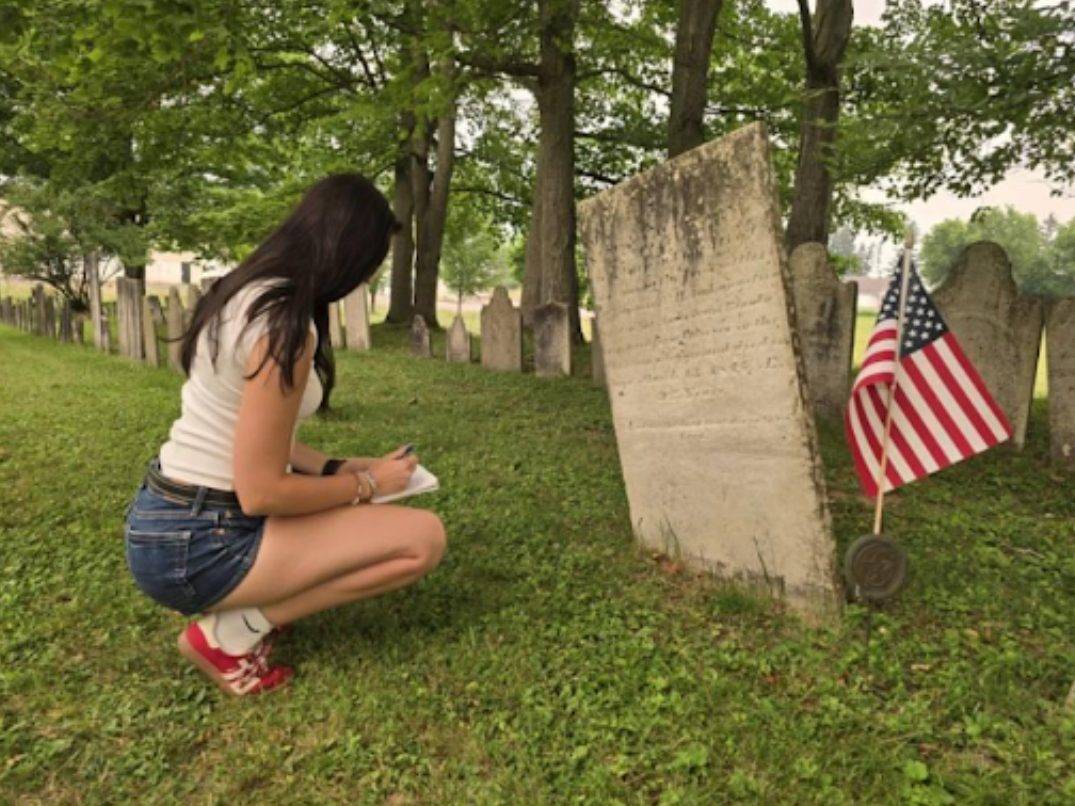
This summer, I worked as a research assistant and exhibit creator for the Hamilton Historical Commission. The Commission shares a space with the Hamilton Public Library, where an exhibit room features both permanent and rotating installations. This space also houses the Commission’s expansive archival collection. The Commission serves more than 4,000 people who live in the village of Hamilton, as well as any interested visitors, and aims to “preserve and share our village’s history through archives, exhibits, and community partnerships” with the hopes of inspiring and educating community members. Through both digital and in-person access, the Commission strives to make Hamilton’s history accessible to everyone who calls the village home and beyond.
In working with the Hamilton Historical Commission, I gained firsthand insight into the inner workings of an advisory board dedicated to serving its community. With the digital age being a prominent facet of society and continuing to reshape how people access information, the Commission has begun undergoing a digital transformation by establishing social media platforms and digitizing archival collections.
Although many community members continue to visit the Commission in person and physical archives remain invaluable, providing online access to historical resources is becoming increasingly important. During my time with the Historical Commission, I was impressed by the board members’ dedication and breadth of knowledge. Hamilton Village’s history dates back to the 1790s, and its archives reflect that rich legacy. Additionally, I was also excited to connect Hamilton history with Colgate University’s history, as many of the original settlers of the village also established what is now Colgate University.
While I did not expect my research to overlap so closely with the University’s history, I was pleased to discover a topic that meaningfully connects local community members with Colgate’s diverse campus community. Through the Upstate Institute, I had the opportunity to serve the community by partnering with the Hamilton Historical Commission. My research this summer included themes commemorating the 250th anniversary of the United States. The goal of my research was to tell the stories of several of Hamilton’s founders and their Revolutionary War service through a public exhibit displayed in the Hamilton Public Library.
In addition, I created a working database of Revolutionary War veterans from Hamilton that documents key information about their lives and military service. My research is a part of a three-phase research project that the Commission will continue after the conclusion of my summer fellowship. The database that I began will be worked towards becoming digitally accessible for public use. Once published, it will allow descendants to learn more about their family histories while also providing community members with an opportunity to honor those who helped secure American independence.
By serving as the foundation for future digital preservation efforts, the database marks an important first step toward expanding public access to Hamilton’s historical records. As a pre-law Classical Studies student, this independent research opportunity has strengthened the skills necessary for both my continued undergraduate education and my future pursuits of a legal graduate education.
This experience required extensive research using both online databases and historical archival materials, skills that will translate well to the examination of legal records and court archives in a future career in law. I was initially drawn to the Upstate Institute due to its commitment to connecting students with meaningful partnerships with a non-profit local organization. I also believed that my existing research and writing skills would allow me to contribute valuable work for my community partner. In being paired with the Hamilton Historical Commission, I was excited to learn about local history for both my own pleasure and for the aid of the greater community. I am grateful that the Upstate Institute provided me with an outlet to contribute meaningful research, support my community, and grow my own intellect.