Rogers Environmental Education Center is New York State’s longest-standing environmental education center. Located in Sherburne, NY, Rogers is operated by the not-for-profit organization Friends of Rogers, in cooperation with New York State Department of Environmental Conservation. The Center is composed of 600 acres, seven miles of trails, and a vast array of habitat including wetland, pine forest, and meadow. On this land, Rogers Center provides a variety of education and volunteer opportunities, including the one I worked with this summer.
I had the honor of working with Rogers Center as the lead of their Great Pollinator Project. The project is a community science initiative that uses iNaturalist to document native pollinators at Rogers Center. This documentation became more important following the awarding of a $254,000 grant last year, courtesy of the New York Community Trust’s New York Pollinator Conservation Fund. Knowing what pollinators are present at Rogers Center gives insight into how pollinator habitat should be restored, and the grant has allowed Rogers to increase habitat restoration efforts. The importance of pollinator habitat restoration is evident by the Empire State Native Pollinator Survey, published in 2022. The survey found that between 38 and 60 percent of native pollinator species are at risk of becoming extinct in New York State. When considering that every third bite of food requires a pollinator, and that some foods such as squash can only be pollinated by native pollinators, the potential consequences of continued pollinator loss become clear.
As the fourth fellow working on pollinator community science and documentation at Rogers, the goal of my fellowship was to focus on pollinator diversity in the stages between habitat restoration, where some habitat has been restored and more is awaiting restoration. In addition to gathering information on what species were present, I also documented what flower species native pollinators were interacting with. This confirmed what plants pollinators like, and will be useful in deciding what to plant for future pollinator habitat restoration. As well as informing restoration efforts, the project serves as an educational opportunity for community members looking to get involved in pollinator restoration efforts. Participating in observation and identification not only teaches the community about pollinators, but also inspires them to conduct restoration projects at their own homes.
As a biology major, I applied to be a Field School Fellow in hopes of connecting ideas learnt in the classroom with real practices in the field. My time at Rogers Center had me building on previous methods for data collection and allowed me to analyze the data collected how I saw fit. It also gave insight into real problems that can arise, such as unexpected habitat disturbance, which can happen when managing a not-for-profit and working with the community. Despite setbacks, I made 209 observations of 61 pollinator species in my two months at Rogers this summer. Three of these species are listed as vulnerable by the International Union for Conservation of Nature (IUCN), confirming Rogers Center contains vital habitat for pollinators facing decline. Additionally, over 60% of plants that native pollinators were seen interacting with were native, confirming native pollinators prefer native plants and giving insight into which plants should be planted for habitat restoration.
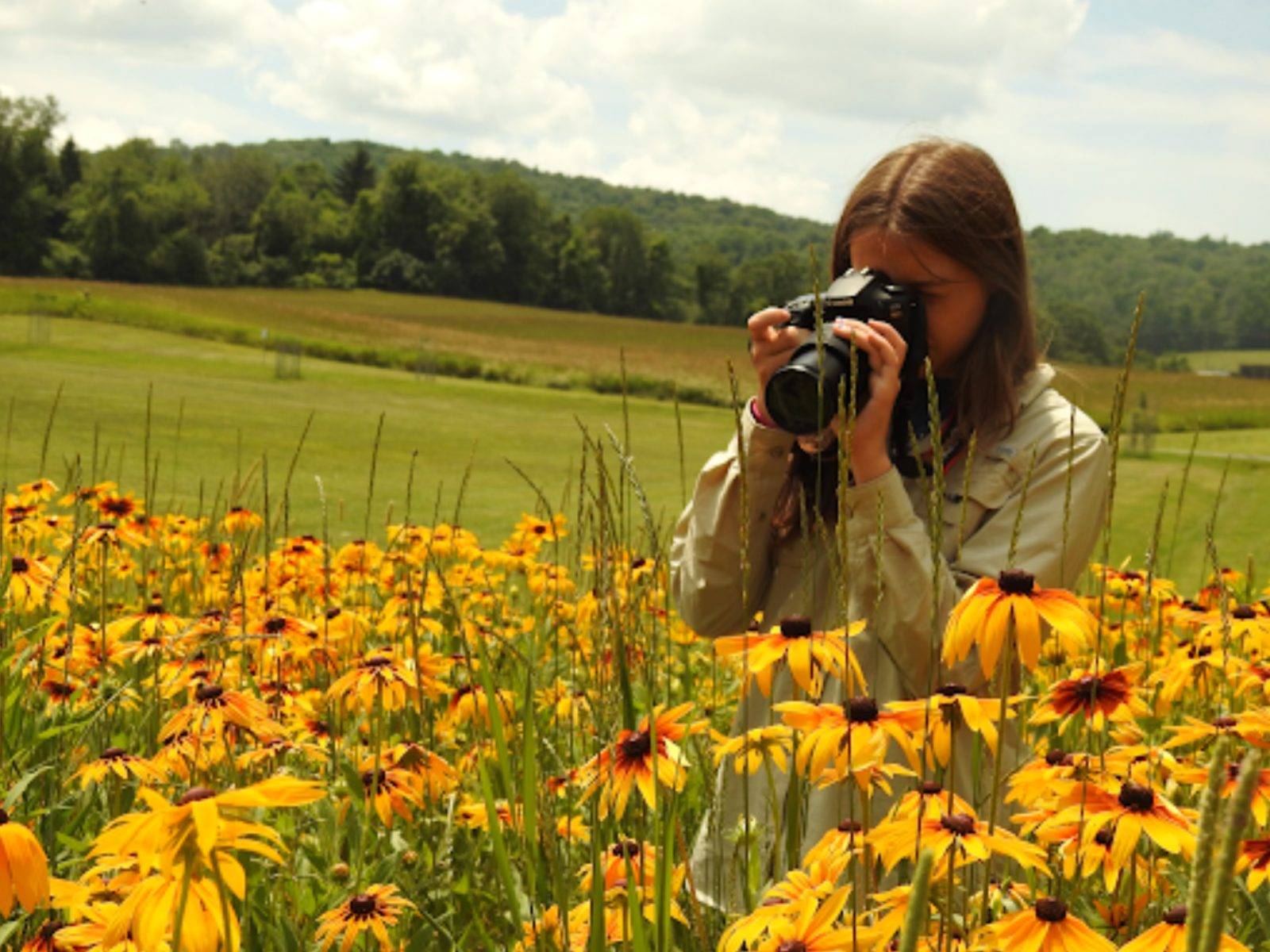
The Great Pollinator Project is a community science initiative, so in addition to collecting data I was also able to connect with community members interested in the project. Throughout the summer I led school groups and summer campers in pollinator focused activities, walked volunteers through how to use iNaturalist and take pictures for the project, and restored habitat with community members. A highlight of my summer was talking to volunteers and other visitors about their memories at Rogers and learning how much the Center means to the wider community. Many people who recalled childhood memories of Rogers did so beside their children or grandchildren, making those same memories for the next generation.
The connection I built with the Center and the people it serves allowed me to learn more about the local community than I have in my three years at Colgate. Rogers Center remains proof that nature and science should and can be accessible to everyone. My experience there confirmed that I want to work with communities to build a more sustainable world, and I remain grateful to both Rogers Center and the Upstate Institute for their guidance and my experience this summer.