This summer, I had the honor and privilege to work under the Thaw Curator of Native Art Christina Burke at the Fenimore Art Museum in Cooperstown, N.Y. During my fellowship, I conducted provenance research on a collection of baskets and objects from the Gottlieb Adam Steiner (1844–1916) Collection and Native objects donated by his grandson, William Steiner Huff (1927–2021). The Fenimore Art Museum features a well-known collection of American fine art, Native art, folk art, and photography. The museum’s Native art collection was established in 1995, when art collectors Eugene and Clare Thaw donated a renowned collection of Native art from North America, establishing the renowned Thaw Collection of Native American Art at the Fenimore Art Museum. The museum’s primary audience is the local Cooperstown and Mohawk Valley community, focusing most of their efforts on education and accessibility to the arts in a rural area.
The opportunity to take part in this summer fellowship came at an important time in my studies, as I had just returned from a semester abroad in London as a member of the Colgate London History Study Group. During my time in London I fell in love with historic research and knew it was something I wanted to continue doing. In addition, I am a public history major and museum studies minor and have always had a career goal of working in museums. As a result, the opportunity provided by the Upstate Institute at the Fenimore Art Museum was a perfect combination of my interests and career goals.
My primary task at the Fenimore Art Museum was conducting provenance research on a series of baskets in the collection attributed to Gottlieb Adam Steiner (1844–1916), a Pittsburgh Steel Magnate, who upon retirement spent his accumulated wealth establishing an impressive collection of over 500 Native North American baskets. From 1914–37, his collection was on loan at the Carnegie Museum of Natural History in Pittsburgh, Pa. It was later displayed in the late 1970s and early 1980s at a private family museum in Lawrence County, Pa. In 1986, the collection was sold, though Huff held onto a few baskets from his grandfather and the family’s collection. Fifteen baskets, either through gift of Huff or through the purchase of the Thaws, ended up in the Fenimore Art Museum collection.
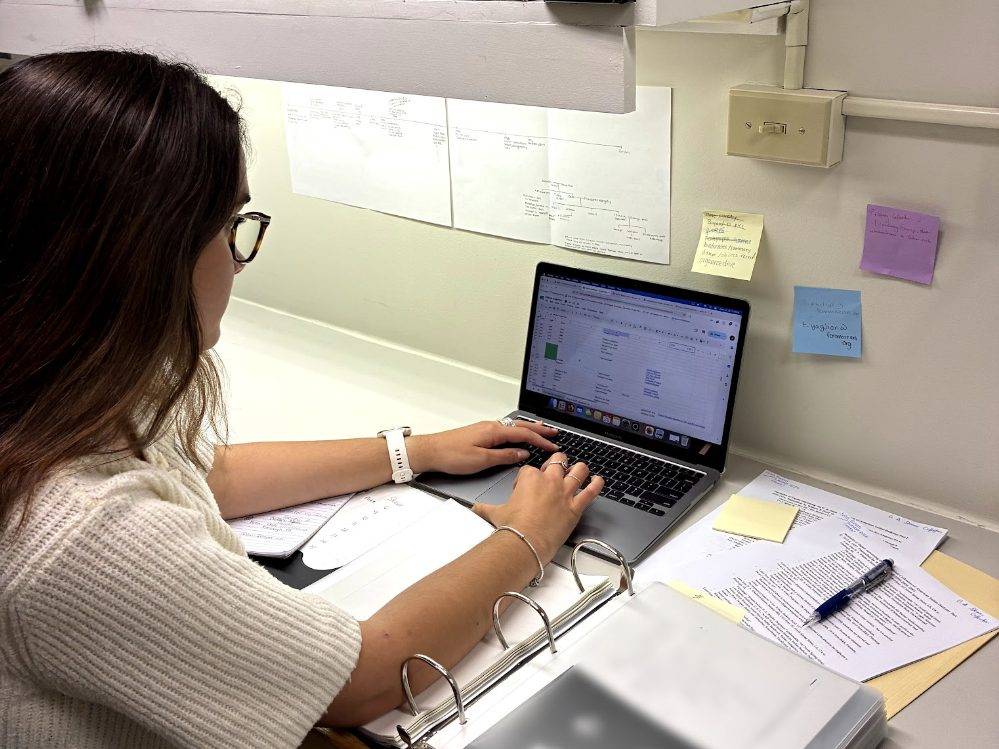
With minimal knowledge or expectations for what my research would uncover, I dove head first into my project, beginning with Huff's documents from the Fenimore Art Museum’s archives and slowly building my way out to resources across the country including auction records, donor and object records from the Fenimore Art Museum, and family heritage records found on Ancestry.com. I also wanted to track the baskets’ current location, which would provide the Fenimore Art Museum information on how their collection relates to other museums. As a result, I spent the final weeks of my internship creating an inventory and tracker of the Steiner baskets, which included auction websites (e.g., Invaluable), art dealer websites, and working with my advisor to contact other museums and scholars who knew about the Steiner collection. My work has culminated in a large constituent file on the G. A. Steiner Collection which includes my research notes, a large folder of primary source documents that include newspaper articles, property and business records, and ancestry-related documents. Together, these documents help to establish provenance of the objects, providing information on where the Steiner collection was held and whose hands it was in during different periods of time.
In researching the Steiner Collection, I have conducted original research which can be utilized by the museum to better understand the Thaw Collection and inform the curatorial decisions made. The constituent file I have created is a foundation, filling an absence in the Fenimore Art Museum’s records, and will have more information added over time. Consequently, this work feeds into Fenimore's goal of education and preservation. I have created a resource which can be shared with the community, and also helps better contextualize the collection. As well, my research provides the museum an opportunity to connect with other institutions and communities that either have Steiner baskets in their collection or are culturally represented.
I would be remiss not to mention that Christina Burke was a wonderful mentor and allowed me many opportunities to learn about how larger museums function. This included providing exposure to social media, advertising, grant work and fundraising, and exhibition curation for the Fenimore Art Museum. An important aspect of this internship was learning and understanding how Native art curation differs from the fine arts or history, and what additional considerations curators must take when working with Native art. I have learned a lot about Native American history, Native culture, and the value of collaboration and fostering relationships with Native communities. As a result, I have gained a valuable perspective I would not have had during my studies at Colgate.
Beyond my duties as a field school fellow, I also got an opportunity to learn about the museum's fundraising efforts. In July, I worked at the Fenimore Art Museum’s annual fundraiser gala, which every year raises funds for educational programming at the Fenimore Art Museum and its sister organization, the Fenimore Farm and Country Village. During the week leading up to and the night of the gala, I had a special opportunity to observe how a museum interacts with its board members, trustees, and members of the local community. The annual gala is just one example of how the Fenimore Art Museum works to maintain high-quality educational programs. With these experiences, this fellowship has taught me the impact of non-profit organizations on local education and the value of making knowledge accessible to all.
This is my first year as a Field School Fellow, and with the museum field an under-appreciated and underfunded field, I am incredibly grateful that Colgate’s Upstate Institute could provide an opportunity for me to get this unique career exposure. I could not have done this without the mentorship and fiscal support provided by Colgate’s Upstate Institute and I look forward to applying the lessons learned this summer and Fenimore's emphasis on educational programs and collections accessibility in my future career.